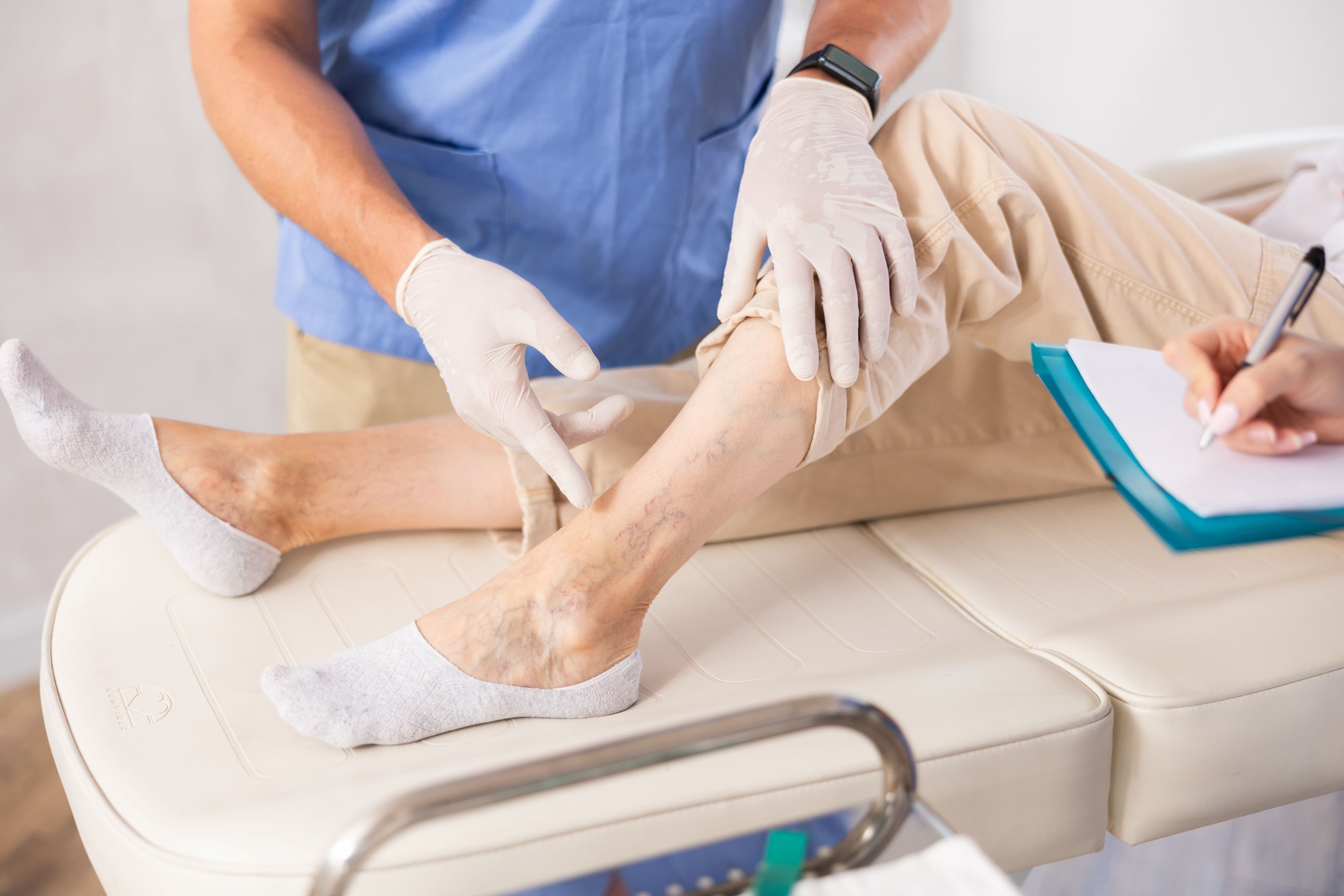
For some, holidays are synonymous with travel and long journeys. These trips by car, bus, train or plane, which sometimes cause immobility for several hours, can cause discomfort for the legs.
Why wear compression on a long journey?
It is important to remember that the contraction of muscles, especially in the legs, is an important factor that helps keep blood flowing through the veins. As you walk, the muscles of the lower limbs, especially the calves, contract and compress the veins, helping blood to travel back to the heart: this is called the muscle pump, a natural mechanism of venous return(1).
Sitting for too long can slow blood flow and promote blood stagnation in the legs. This can cause a feeling of discomfort, heavy and swollen legs, and sometimes even more serious complications(2).
Wearing class 2 compression (ASQUAL – 15-20 mmHg) is therefore strongly recommended for long-term seated travel, and for all air transport journeys(1)(3).
Explanation of traveller's thrombosis
Travelling increases the risk of developing venous thrombosis, also known as traveller's thrombosis, where a blood clot forms in the veins of the legs(1). The major danger occurs if this clot travels, in rare cases, to the lungs, causing a pulmonary embolism, which can occur a few hours or days after the displacement(1)(4).
Is the risk really higher on a plane? Yes, there are several factors that make the situation worse when flying:
Dry air and cabin pressurization(5)
Prolonged sitting(1)
Slightly reduced oxygenation that may affect sensitive passengers with heart or lung problems(1).
Some people are at higher risk of developing deep vein thrombosis (DVT), so they should be especially vigilant(6):
Individuals with a history of DVT or pulmonary embolism
Individuals with a case of DVT or pulmonary embolism in a close family member
Pregnant women
Overweight or obese people
People with certain inherited abnormalities of blood clotting
Reflexes to adopt for a plane flight
Before any long or short air travel, it is advisable to(1)(5):
Drink plenty of water before and during the flight
Wear compression socks or socks (minimum ASQUAL class 2)
Wear loose clothing that is warm enough (because of air conditioning)
Avoid keeping luggage on your lap or feet so as not to restrict movement too much
Avoid cross-legged and mobilize the calves with exercises and stretches on the spot, or by walking for a few minutes regularly
Follow any exercise programs offered by the airline.
Darmendrail, C., Bismuth, M., Mesthé, P., Boyer, P., Escourrou, B. and Oustric, S. (2020). Prophylaxis of thromboembolic events during air travel. Medicine. 16(2), 62-68. https://doi.org/10.1684/med.2020.516.
Venous insufficiency: risk situations - FFC 6. WHO: International Travel and Health 2012 (p.14-20) 7. SAGUEZ, R. (2018). Advice to patients for air travel [Thesis for the state diploma of doctor of pharmacy, University of Picardie Jules Verne – U.F.R. of PHARMACY]. https://dumas.ccsd.cnrs.fr/dumas-02156608/document
The products mentioned are class I medical devices intended for the treatment of venous pathologies. These medical devices are regulated health products that bear, under this regulation, the CE marking. Indications and contraindications: refer to the package leaflets. Read the instructions for use, indications and contraindications of the products carefully. If in doubt, consult a healthcare professional.
Signs of venous insufficiency: who and when should you consult ?
Chronic venous insufficiency, also known as chronic venous disease, can result from problems with superficial veins, such as varicose veins, or deep veins, such as the after-effects of phlebitis, causing reflux or obstruction that leads to venous hypertension in the ankle.
Prolonged sitting, especially in a bad position, can cause or aggravate back pain. This is especially the case in the car. So how do you avoid back pain when driving?
Venotonics are widely used drugs for heavy legs; But the Haute Autorité de Santé judged their medical serviceto be insufficient in 2001, and they were completely de-reimbursed in 2008. They relieve symptoms — but they don't treat venous disease. Here's what it means for you.