Osteoarthritis of the knee, some ideas for exercises to do at home
Osteoarthritis of the knee can be a painful obstacle. It can limit mobility and affect quality of life but also physical and mental health1.
However, exercising at home, on a regular and moderate basis, can help relieve pain, improve mobility, and improve the knee joint2.
Understanding osteoarthritis of the knee
Knee osteoarthritis is the premature wear and tear of the cartilage of the knee joint.3 It is often associated with local inflammation and bone growths (osteophytes)3,10
It is the most common osteoarthritis of the lower limbs, especially in overweight and sedentary people, but also in high-level athletes. 8) It causes pain and stiffness that interferes with activities3. If you want to know more about osteoarthritis of the knee, read our article on knee osteoarthritis.
The importance of exercise for osteoarthritis of the knee
It is strongly recommended that you seek advice from your doctor and/or seek the advice of a physiotherapist beforehand. They will be able to prescribe the exercises and activities that are most appropriate to your situation and preferences.
Physical therapy is the most commonly recommended non-pharmacological and non-surgical treatment for musculoskeletal diseases4.
Aerobic physical activity and muscle-strengthening exercises can help relieve the symptoms of osteoarthritis and improve joint function. There are many ways to practise and must be adapted to the affected joint2.
Knee exercise program for osteoarthritis
Exercising when suffering from knee osteoarthritis should improve joint amplitude, muscle and tendon lengthening, strength, endurance and reduce pain and load on the symptomatic compartment.2
The intensity of exercise programs can be low, moderate, vigorous or high depending on the goal of treatment2. It is essential to focus on safe and efficient movements.
1.Muscle Strengthening Exercises2,4,9
Strengthening the muscles surrounding the knee can help cushion, support, and protect the knee joint itself. It can even help you with your daily activities such as getting up from a chair.
These exercises can help strengthen the muscles around the knee such as the quadriceps (located in the front of the thigh)2. Strengthening these muscles will allow you to improve and strengthen the support of the knee joint2.
(You can usea chair or bench to support you during exercises.)
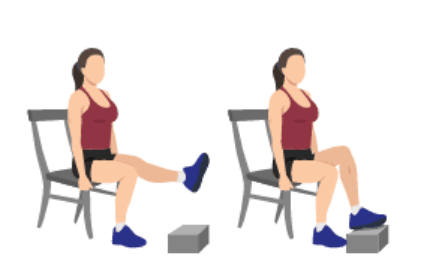
Seated leg extension: Sit in a chair, use an object to elevate the working leg, extend one leg and hold the right for 5 seconds, then slowly bend and lower it. Repeat 8 to 12 times, then do the same with the other leg.
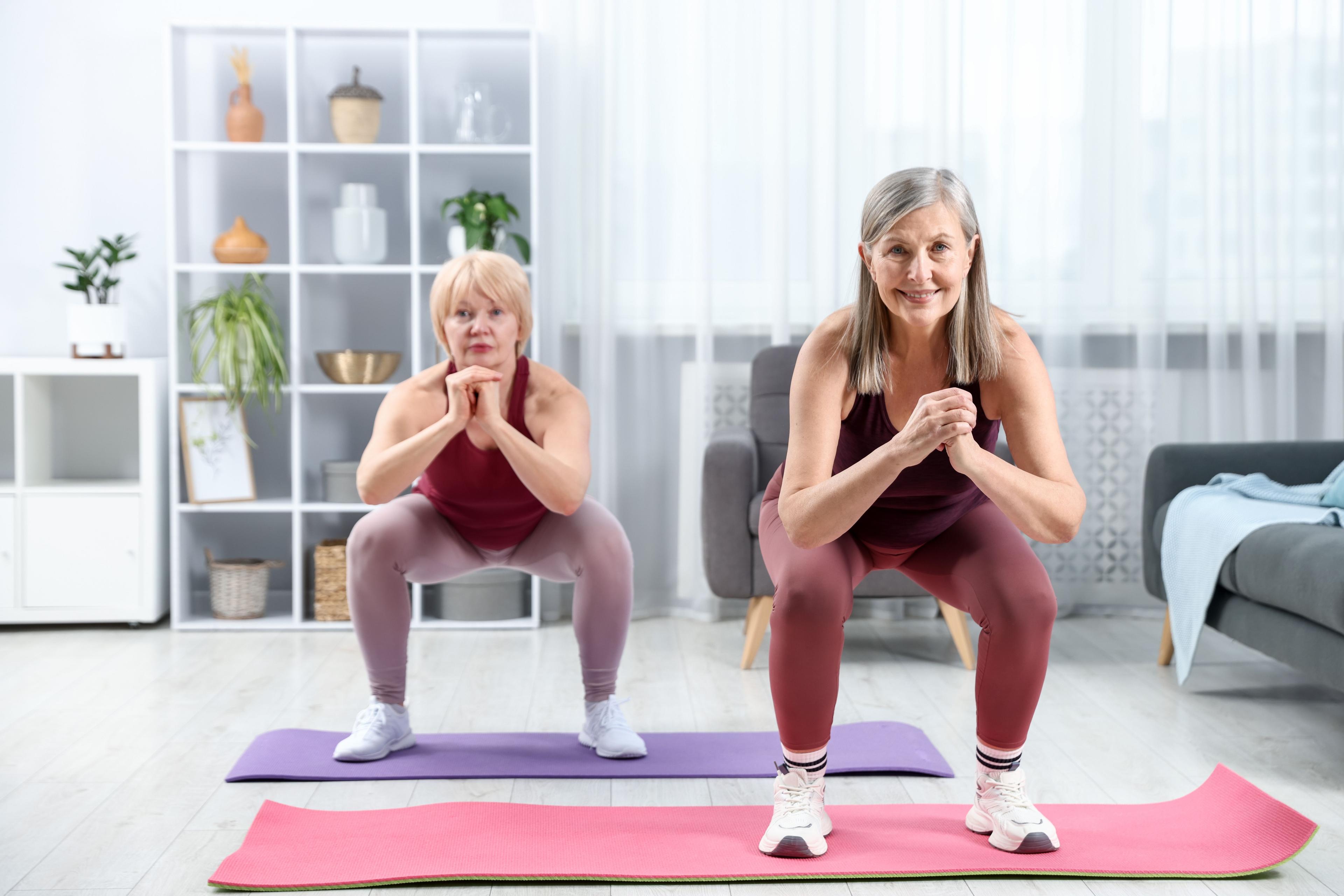
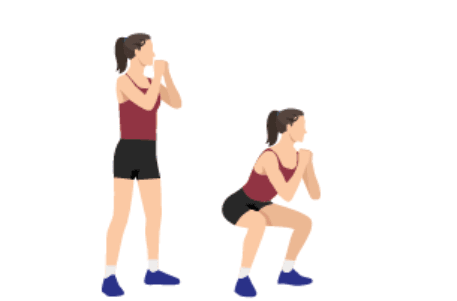
Squats: Stand with your back straight or slightly tilted forward, with your feet flat on the floor, shoulder-width apart. As you descend, bend your knees and push your hips back, making sure that your knees stay in line with your toes and don't go past your toes. Keep your eyes set far ahead and make sure your feet are firmly planted in the ground. Repeat for a minute, then take a short break and try to continue the exercise a little longer.
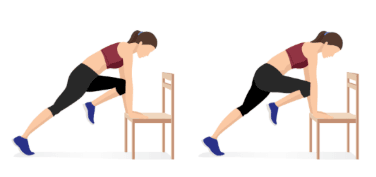
Mountain Climbers: Lie on your stomach, lean on your hands, arms outstretched and on your toes, legs outstretched; your hands are shoulder-width apart. Bring your right knee gently between your elbows and gently rest your straight leg stretched over your toes. Do the same with the left leg, continue to alternate the movements of the legs. You also have the option of using a chair by placing your hands on the seat, as in the illustration.
It is normal to feel some discomfort or find the exercises difficult; If they were easy, they probably wouldn't be effective.
However, if the pain is too severe to complete the exercise, if the pain persists for more than two hours after exercise. Or if your knees are not able to handle the exercise, or if your knees swell the next day, it may be necessary to review and adjust the intensity of the exercise.
2. Stretching Exercises2,4
These exercises help reduce knee stiffness and maintain joint mobility. Stretching muscle groups such as the hamstrings or quadriceps can improve the knee's range of motion if extension or flexion is limited. Using a variety of exercises in different positions can increase the benefits.
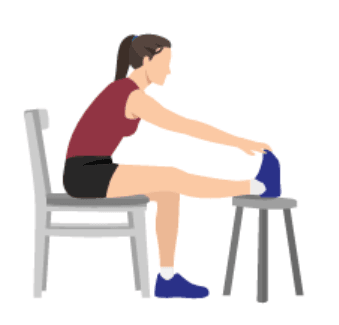
Sit in a chair, place your right leg on a chair or bench facing you. While keeping your right leg straight, reach for your right foot with your hand, then pull lightly on your foot, as shown in the illustration. Alternate the exercise with your left leg.
3. Aerobic Exercise
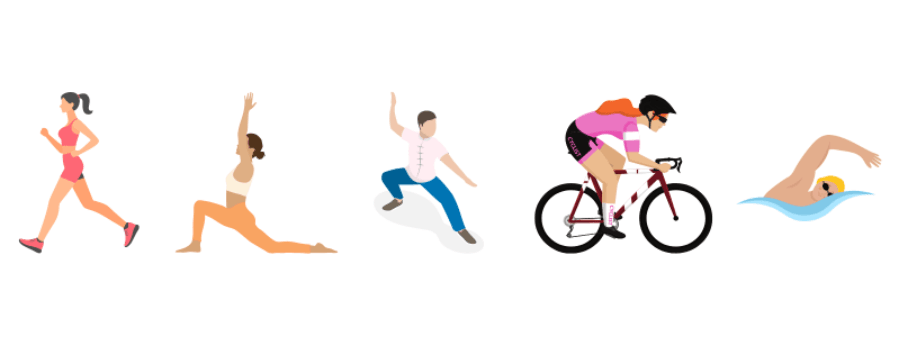
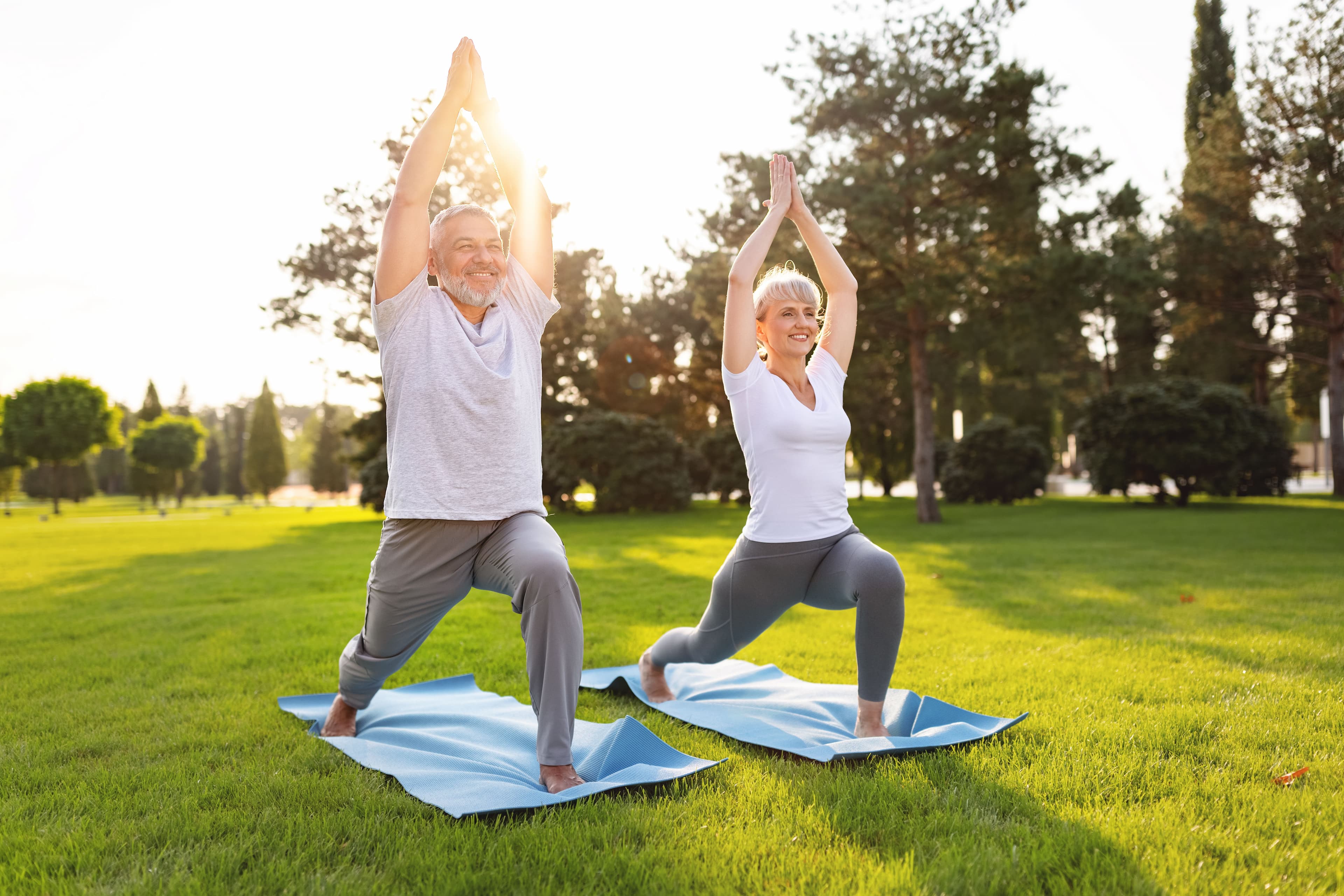
There are many different models of aerobic exercise, jogging, yoga, tai chi, biking, and swimming. These types of exercises aim to improve joint function and stability, as well as relieve painful symptoms in patients with osteoarthritis4.
Expert advice for good care
The practice of physical activity must be gradual and suitable for your situation;
Fun is the secret to consistency: choose exercises that you like to practice;
Depending on the case, physical activity 3 times a week or 30 minutes a day is recommended;
Wear comfortable sportswear, suitable shoes and be prescribed insoles or a knee pad if necessary;
Keep a moderate activity that doesn't make you out of breath;
If pain occurs, stop the activity;
Remember to drink water regularly to stay hydrated.
If you have any other questions, ask your doctor for advice.
Conclusion
It has been demonstrated: regular physical exercise has positive effects on the stiffness and pain of osteoarthritis of the knee5. In addition, physical activity carries a very low risk of adverse effects5.
In recent years, exercise therapy has been progressively recommended as a non-pharmacological treatment for osteoarthritis. The main reasons are the reduced cost and its convenience. As a complementary therapy, it aims to relieve pain, improve joint function and the quality of daily life of patients with osteoarthritis4.
Start doing simple exercises today to improve your mobility. They will allow you to relieve yourself and improve your quality of life!
Chen Y, Liu J, Li X, Tang D, Jin X, Zhang Z, Ji W, Tao S, Jiang H. Effects of Golden Plaster on Knee Osteoarthritis: A Multicenter Randomized, Double-Blind, Placebo-Controlled Trial. Evid Based Complement Alternat Med. 2022 Feb 2;2022:4205648. DOI: 10.1155/2022/4205648. PMID: 35154343; PMCID: PMC8828341
Nguyen C, Lefèvre-Colau MM, Poiraudeau S, Rannou F. Rehabilitation (exercise and strength training) and osteoarthritis: A critical narrative review. Ann Phys Rehabil Med. 2016 Jun; 59(3):190-195. doi: 10.1016/j.rehab.2016.02.010. Epub 2016 May 5. PMID: 27155923.
Fautrel B, Hilliquin P, Rozenberg S, Allaert FA, Coste P, Leclerc A, Rossignol M. Impact of osteoarthritis: results of a nationwide survey of 10,000 patients consulting for OA. Joint Bone Spine. 2005 May; 72(3):235-40. DOI: 10.1016/J.JBSPIN.2004.08.009. PMID: 15850995.
Wang W, Niu Y, Jia Q. Physical therapy as a promising treatment for osteoarthritis: A narrative review. Front Physiol. 2022 Oct 14;13:1011407. DOI: 10.3389/FPHYS.2022.1011407. PMID: 36311234; PMCID: PMC9614272.
NICE. (2022, October 19). Overview | Osteoarthritis in over 16s: diagnosis and management | Guidance | NICE. https://www.nice.org.uk/guidance/ng226
Sport activity as risk factor for early knee osteoarthritis March 2019 Journal of Biological Regulators and Homeostatic Agents 33(2 Suppl. 1):29-37 and Li, X., Wang, S., Liu, W. et al. Causal effect of physical activity and sedentary behaviors on the risk of osteoarthritis: a univariate and multivariate Mendelian randomization study. Sci Rep13, 19410 (2023). https://doi.org/10.1038/s41598-023-46984-2
InformedHealth.org Cologne, Germany: Institute for Quality and Efficiency in Health Care (IQWiG); 2006-. Osteoarthritis of the knee: Learn More – What can you do to strengthen your knees? [Updated 2024 May 15]. Available from: https://www.ncbi.nlm.nih.gov/books/NBK544978/
Characterizing Osteophyte Formation in Knee Osteoarthritis: Application of Machine Learning Quantification of a Computerized Tomography Cohort: Implications for Treatment Vincent, Graham et al. The Journal of Arthroplasty, Volume 39, Issue 11, 2692 – 2701
Osteoarthritis of the knee: physical activity at the heart of its management
In osteoarthritis of the knee, regular and moderate physical activity is recommended to alleviate pain and improve mobility. Below are some tips to help you look after your knees by getting them moving.
The effective treatment of osteoarthritis of the knee (or gonarthrosis) requires multidisciplinary management. Among the various healthcare professionals involved, the physiotherapist may play a particularly important role. But when is their input required? And what is there exact role?
Making a few changes to your diet can help relieve the symptoms of osteoarthritis of the knee (or gonarthrosis) and slow down its progression(1). Improving the balance of your diet and favouring joint-protecting foods is easy and really helps.