Stress-related back pain: when the lower back suffers
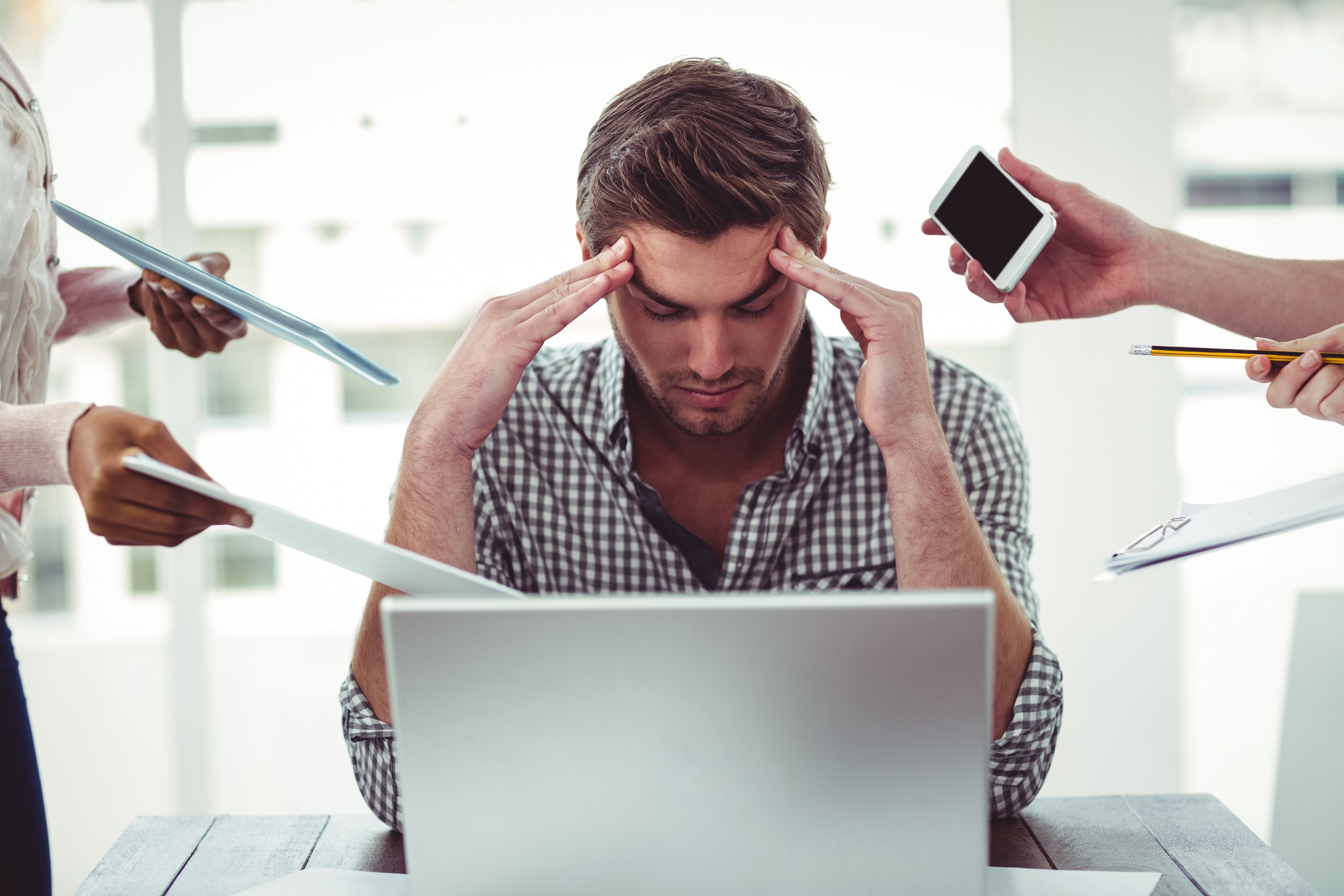
We are well aware of the effects of stress on mental health, as well as cardiovascular health. But the impact on the back may seem less obvious. And yet, stress and back pain are closely linked, so much so that stress is recognized as one of the major causes of back pain.
Numerous studies have investigated this frequent relationship, particularly in the workplace. Recently, researchers have shown that people employed in a stressful task, subject to anxiety-provoking constraints, are more likely to develop low back pain (1) than others, regardless of the physical difficulty of this task.
Stress hormones and back pain
But how can stress invite itself into our lower back? There are several explanations for this. The first are direct, physiological. When faced with a stressful situation, the body releases catecholamines (hormones, including adrenaline, which increase heart rate, blood pressure, body temperature, etc.) as well as glucocorticoids (hormones that increase the amount of sugar in the blood).
These hormones are released to prepare the body to act in the face of stress. But they also promote muscle tension and inflammatory states. However, when the stressful situation continues, the body becomes saturated with these hormones and is no longer able to regulate itself (2).
Indirect factors
The other explanations are indirect but equally important. Stress is the cause of other disorders that can affect the back: sleep disorders, fatigue, depressive disorders, etc. All these conditions "are likely to increase muscle tension or intervene in the causal chain between the mechanical stresses of work and spinal pain," write the researchers of an Inserm (3) expert report devoted to the issue.
Back pain can therefore be an indirect symptom of a general state of stress. But we can look at the problem the other way around: stress is not only a cause, it is also a consequence of back pain. In fact, people with low back pain, especially chronic low back pain, often report an overall deterioration in the quality of their life (4). Pain, but also having to take time off work, having difficulty carrying out daily activities, can be significant sources of stress and anxiety. Which, in turn, will increase the pain...
Break the vicious circle and relieve your back pain
The solution? Don't stress anymore... But this is obviously easier said than done! However, it is important to question the sources of stress in order to try to eliminate it. If it comes from a professional situation, it may be interesting to open up to your employers. More and more companies are taking the problem of back pain very seriously - low back pain is responsible for one in five work stoppages (5). Thinking about the ergonomic or psychosocial conditions of the work environment can be a way to act on them.
In all circumstances, whether the stress is of personal or professional origin, therapeutic work can be beneficial: psychotherapy, mindfulness meditation, acupuncture, etc. Similarly, physical activities have been shown to have virtues for mental well-being (6). From hiking to yoga, the most important thing is to move! At work, taking regular breaks to walk and "unplug" allows you to take a few minutes out of the ambient stress. Also think about breathing exercises to learn how to manage stress.
For more information, consult your doctor.
Prognostic psychosocial factors for disabling low back pain in Japanese hospital workers, Takahiko Yoshimoto & al., PLoS One, 2017. DOI: 10.1371/journal.pone.0177908
Lombalgie, facteurs de risque, 2018, Institut national de recherche et de sécurité pour la prévention des accidents du travail et des maladies professionnelles (INRS)
Facteurs de risque psychosociaux des lombalgies, expertise collective de l’Inserm : « Lombalgies en milieu professionnel : quels facteurs de risque et quelle prévention ? », Les Editions Inserm, 2000
The impact of 29 chronic conditions on health-related quality of life: a general population survey in Finland using 15D and EQ-5D, Saarni S.I. & al. Quality of Life Research, 2006. DOI : 10.1007/s11136-006-0020-1
« Santé travail : enjeux et actions », rapport de l’Assurance Maladie, 2018
Dose-response relationship between physical activity and mental health: the Scottish Health Survey, M Hamer & al, British Journal of Sports Medicine, 2008. DOI : dx.doi.org/10.1136/bjsm.2008.046243
While the origin of back pain is sometimes unexplained, it is now known that being overweight is a major risk factor for low back pain: a study reveals that the risk of lumbar disc degeneration increases by 30% for overweight people and 79% for obese people.8
When you have Back pain, you may feel less like having sex, because you are afraid of Pain or of making your Pain worse. But some positions may help limit pressure on the Lumbar area. They may help you keep a fulfilling sex life Without waking up Pain or making it worse.