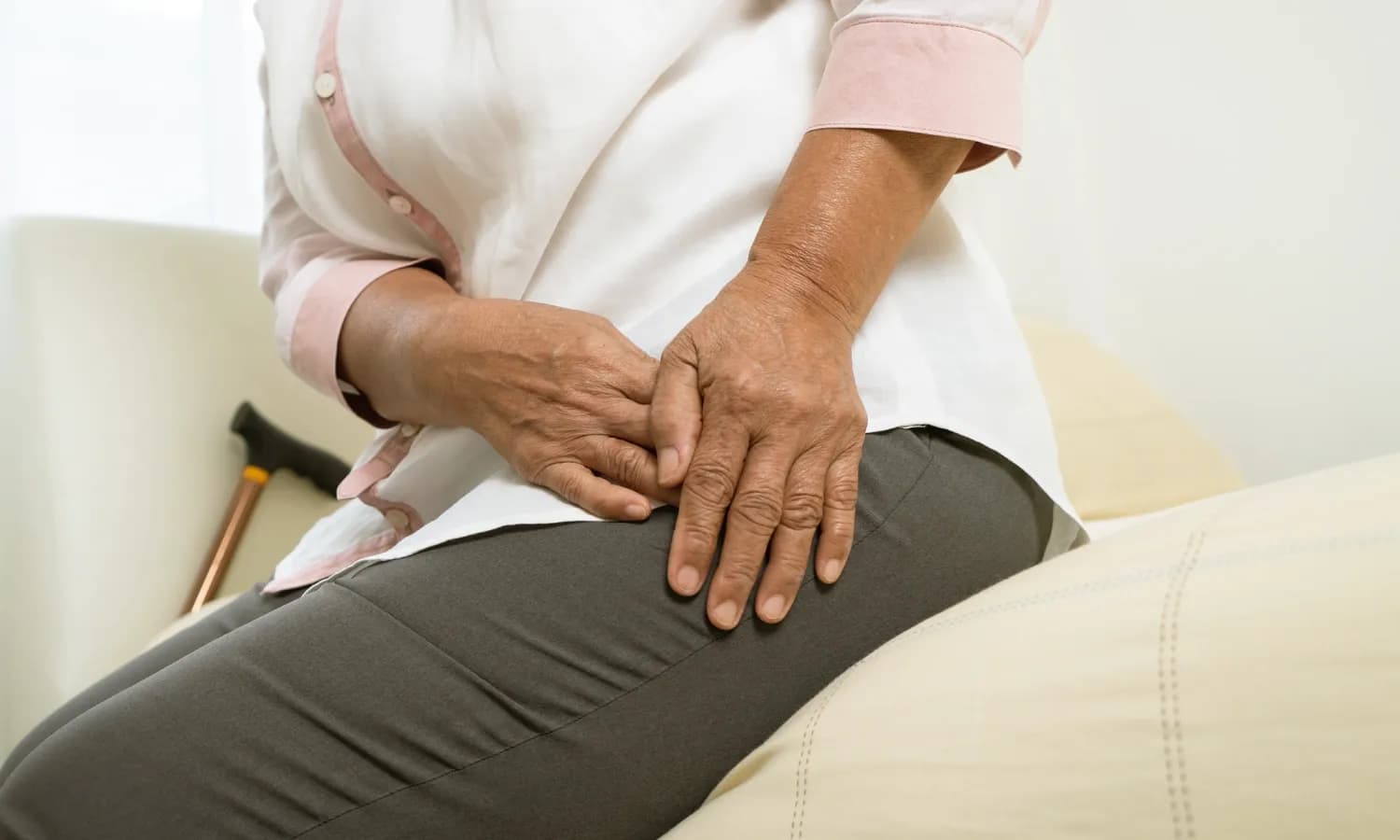
Osteoarthritis and work: how to continue working without putting yourself in danger?
You have just been diagnosed with osteoarthritis and the first question that comes to mind may be this: will I still be able to go to work? It's a legitimate — and often agonizing — question. Because osteoarthritis is not only a pain in the knees or hands, it is also a reality that invites itself into your daily professional life.
The good news is that in the vast majority of cases, osteoarthritis can continue to work. But a few adaptations can be useful to limit pain, preserve function and avoid excessive stress on the joints. We explain everything to you, with supporting sources.
When you have osteoarthritis, can you continue to work?
The short answer: yes, most of the time. The full answer: it depends on your job, your affected joint and the stage of your osteoarthritis.
Osteoarthritis is a chronic disease of the joint, characterized in particular by a progressive alteration of the articular cartilage.1 It can affect the knees (this is called knee osteoarthritis), hips (hip osteoarthritis), shoulders, hands, ankles or the lumbar spine (lumbar arthritis). Depending on the structure concerned, the constraints at work are not the same.
What is certain is thatcomplete rest, or rather prolonged cessation of all activity, is generally not recommended. The practice of adapted physical activity is recommended in peripheral osteoarthritis, with a high level of evidence of benefits — this is what the HAS reminds us in its physical activity prescription sheets published in July 20222. For the majority of people with osteoarthritis, the challenge is not to stop working, but to adapt their workstationand habits to preserve their joints. Indeed, some severe forms of osteoarthritis can lead to work stoppages.
While the adaptation of the workstation – whether or not it is recognised as a disabled worker – is only one tool among others, maintaining employment contributes to physical, mental and social health, as La Revue du Praticien (2026) points out3.
A few principles to remember if you continue to work:
Take regular breaks. Alternating positions, getting up and walking for a few minutes during the day helps to limit prolonged stress on the joints.
Do not remain in a fixed position for too long.Whether you're sitting in front of a screen or standing behind a counter, maintaining the same posture for long periods of time can cause joint pain to appear or worsen in some people.
Report your situation to the occupational physician. The latter can offer workstation arrangements — ergonomic seat, footrest, adjustable table — that sometimes make a real difference. The 2024 recommendations of the French Society of Rheumatology (SFR) on osteoarthritis of the hand insist on the importance of patient information and self-management, objectives shared with the occupational physician in the professional context.4
What jobs should be avoided in case of osteoarthritis?
Some jobs are objectively more difficult to perform with osteoarthritis, because they expose the joints to more repeated mechanical stress, and some jobs may therefore require adaptations in the event of osteoarthritis.
Solid evidence shows that workers who have to perform tasks that put a lot of strain on the knees — going up and down stairs, kneeling on hard surfaces, lifting heavy loads — are at greater risk of developing knee osteoarthritis, according to a review of knowledge listed in the INRS document portal.5
Specifically:
In the case of osteoarthritis of the knee or hip:jobs involving long standing positions (catering, commerce, nursing, teaching), jobs requiring frequent kneeling (plumber, tiler, gardener), or jobs requiring repeated heavy loads.
In the case of osteoarthritis of the hand or thumb:any activity with repetitive movements of the fingers and wrist (intensive keyboard, cash register, hairdressing, sewing) may increase pain or functional discomfort and require adaptations to the workstation. Prolonged repetition of the same gestures, as in certain manual or artistic professions (sewing, music, hairdressing, etc.), can contribute to the wear and tear of the joints and promote the appearance of osteoarthritis in some people.
In the case of low back osteoarthritis: positions involving prolonged sitting or repeated handling may be less well tolerated, as well as repetitive handling or lifting work.
This does not mean that you should give up your profession. This means that a discussion with your GP, rheumatologist and the occupational doctor is necessary to assess possible adaptations together. Solutions exist: work orthoses to stabilize a knee or wrist, orthopedic insoles, ergonomic arrangements.
Osteoarthritis: how long does it take to be off work?
A sick leave for osteoarthritis is not systematic — it is prescribed according to the severity of the symptoms and the constraints of the position. There is no standard duration: it all depends on your situation.
There are generally two cases:
Occasional stopping during an inflammatory flare-up
Osteoarthritis progresses in attacks: periods of intense pain, sometimes accompanied by joint swelling, alternate with calmer phases. Osteoarthritis can thus impact personal and professional life, and during an attack, your doctor may prescribe a few days to a few weeks of stoppage depending on the intensity and your activity.
Longer discontinuation in the case of severe osteoarthritis
For advanced knee osteoarthritis or hip osteoarthritis, especially before or after surgery (prosthesis), the absences can last from several weeks to a few months. In advanced forms of knee osteoarthritis or hip osteoarthritis, surgery such as the fitting of a prosthesis may sometimes be considered when pain and functional limitation become significant despite well-conducted treatment. In this context, the work stoppage can extend over several weeks or several months depending on the intervention performed and the professional constraints.
If your osteoarthritis prevents you from practising your profession for a long time, other schemes exist: the RQTH (Recognition of the Quality of Disabled Worker), which entitles you to job adaptations and certain aids, or in the most severe cases, a disability application to the Social Security. Your GP is the right person to guide you through these steps.
Osteoarthritis and work: the reflexes to adopt on a daily basis
Beyond work stoppages and job adjustments, there are simple habits that make a difference in everyday life.
Adapted physical activity — the first-line treatment
This is probably the most important and least intuitive tip. All national and international recommendations (EULAR, ACR, OARSI) place adapted physical activity as the first-line treatment for osteoarthritis, with a high level of evidence and expert consensus — randomized controlled trials and meta-analyses that have demonstrated the effectiveness of exercise on pain, activity limitations, and quality of life2. Walking, swimming, cycling or gentle yoga are particularly recommended.
Orthotics and support devices
Depending on the affected joint, wearing an orthosis or knee brace for osteoarthritisduring work activities can reduce pain and stabilize the joint. These medical devices aren't there to replace movement — they're there to keep you moving safely.
Weight management
Fat cells, which are larger and more numerous in overweight people, release molecules that promote a chronic inflammatory state of low intensity, exacerbating osteoarthritis and likely to participate in the mechanisms involved in the progression of osteoarthritis, even in joints not subject to weight constraint1. Whenwalking, the knees experience forces far greater than your body weight, usually between 2 and 3 times that weight6 andwhen jumping or landing, your knees can carry a much greater load than your weight, sometimes up to 3 to 4 times more7. — which explains the well-documented association between overweight and cartilage degradation. Weight loss, even moderate, significantly improves functional status.
A balanced diet rich in plant-based foods
Obesity not only causes strong mechanical stress but also contributes to the destruction of cartilage by promoting a chronic inflammatory state, via the excessive diffusion of pro-inflammatory cytokines, recalls La Revue du Praticien3. Conversely, a diet rich in omega-3 (oily fish, flaxseed, nuts) and antioxidants (red fruits, green vegetables) can help modulate this inflammation.
Osteoarthritis makes a difference — there's no denying that. But it does not mean the end of your professional life. With the right arrangements, gestures and tools, the vast majority of people with osteoarthritis continue to work and stay active.
The main thing is not to remain alone in the face of these questions. Your GP, your rheumatologist, the occupational doctor and rehabilitation professionals are there to support you.
This article is for informational purposes. It is not a substitute for medical advice. If you have any doubts about your health or fitness for work, consult your doctor.
Chen, D., Shen, J., Zhao, W., Wang, T., Han, L., Hamilton, J., & Im, H. (2017). Osteoarthritis: toward a comprehensive understanding of pathological mechanism. Bone Research, 5
Gaudreault, N., Durand, M., Moffet, H., Hébert, L., Hagemeister, N., Feldman, D., Bernier, M., Genest, K., Laprise, S., & Mayrand-Paquette, A. (n.d.). Review of knowledge on the risk factors for knee osteoarthritis and on assessment tools and interventions in terms of care and services. LighthouseSST. https://pharesst.irsst.qc.ca/expertises-revues/36/
Thelen DG, Won Choi K, Schmitz AM. Co-simulation of neuromuscular dynamics and knee mechanics during human walking. J Biomech Eng. 2014 Feb; 136(2):021033. DOI: 10.1115/1.4026358. PMID: 24390129; PMCID: PMC4023657.
Lipps DB, Wojtys EM, Ashton-Miller JA. Anterior cruciate ligament fatigue failures in knees subjected to repeated simulated pivot landings. Am J Sports Med. 2013 May; 41(5):1058-66. doi: 10.1177/0363546513477836. Epub 2013 Mar 4. PMID: 23460331; PMCID: PMC6388619.
Managing daily life with osteoarthritis of the knee
It can be difficult to live with osteoarthritis of the knee - also known as gonarthrosis - but it is possible to preserve your quality of life by making a few everyday adjustments. Below is some practical advice to help you carry out routine tasks, such as housework, cooking, DIY or gardening.