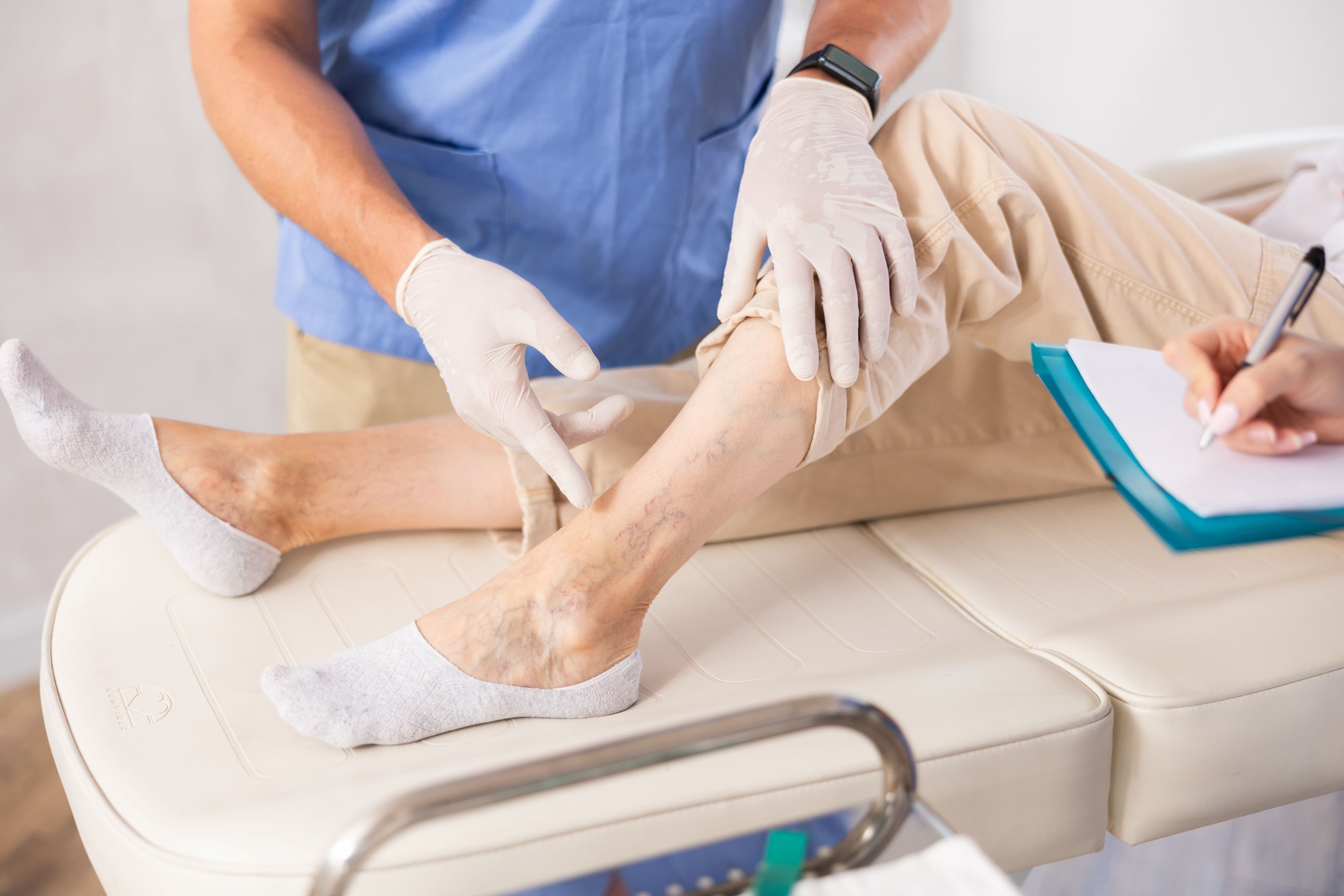
Need we remind you that chronic venous insufficiency is a major medical and social problem, with a significant impact on quality of life? Among the simple questions designed to estimate the risk of venous insufficiency are age, being overweight and sedentary, and the existence of a family history. It is on the basis of a combination of these basic parameters, assessed through various tests, that the appropriateness of consulting a doctor and undergoing treatment is determined.
Genetic origin is the main cause
Chronic venous insufficiency is a complex disease resulting from both environmental factors (directly linked to the patient's lifestyle) and genetics. The genetic approach therefore opens up new avenues for understanding the disease and its therapeutic management. Various scientific research studies now show that genes and certain anomalies (affecting the coagulation system in particular) play a role in the onset and development of venous insufficiency. Researchers have also observed that these same genetic anomalies can also be found in chronic leg ulcers.
Deep vein thrombosis and chronic venous insufficiency: 2 very different diseases
In venous insufficiency secondary to deep thrombosis, genetic factors are superimposed on hereditary thrombophilia... which sometimes leads to confusion between the two diseases. Thrombophilia - which is not venous insufficiency - creates hyper-coagulability, and therefore a risk of thrombosis in the lower limbs.
Estimates of their impact vary. But it appears that the factors involved in venous thrombosis, which itself leads to secondary chronic venous insufficiency, constitute the genetic context. To sum up: these two diseases have genetic factors in common, but they are different diseases, and one can generate the other.
In most cases, venous disease has a hereditary origin, which means that there is a genetic predisposition in people who develop the disease.
If you have any further questions, ask your doctor for advice.
V. Crébassa et al, Hérédité et maladie veineuse: la fin du dogme de l'hérédité maternelle dominante? Phlébologie 2014, 67,3, pp13-21C. Hotoleanu and C.Jurj. The Involvement of Genetic Factors in Chronic Venous Insufficiency.. ROM. J. INTERN. MED, 2008, 46, 2, pp119-123
Nicolaides, Arguments for and against a genetic cause of chronic venous insufficiency. Phlebolymphology, 2001; 35: 3-5.
Chronic venous disease and the genetic influence
Article published on 2 August 2016 by Nathaly Mermet, science and medical journalist.
Signs of venous insufficiency: who and when should you consult ?
Chronic venous insufficiency, also known as chronic venous disease, can result from problems with superficial veins, such as varicose veins, or deep veins, such as the after-effects of phlebitis, causing reflux or obstruction that leads to venous hypertension in the ankle.
Pregnancy:
the belly is quite heavy, not the legs!
An aspect of pregnancy that is often forgotten or little mentioned is the appearance of signs of venous insufficiency such as heavy legs, leg edema or varicose veins.
Venotonics are widely used drugs for heavy legs; But the Haute Autorité de Santé judged their medical serviceto be insufficient in 2001, and they were completely de-reimbursed in 2008. They relieve symptoms — but they don't treat venous disease. Here's what it means for you.