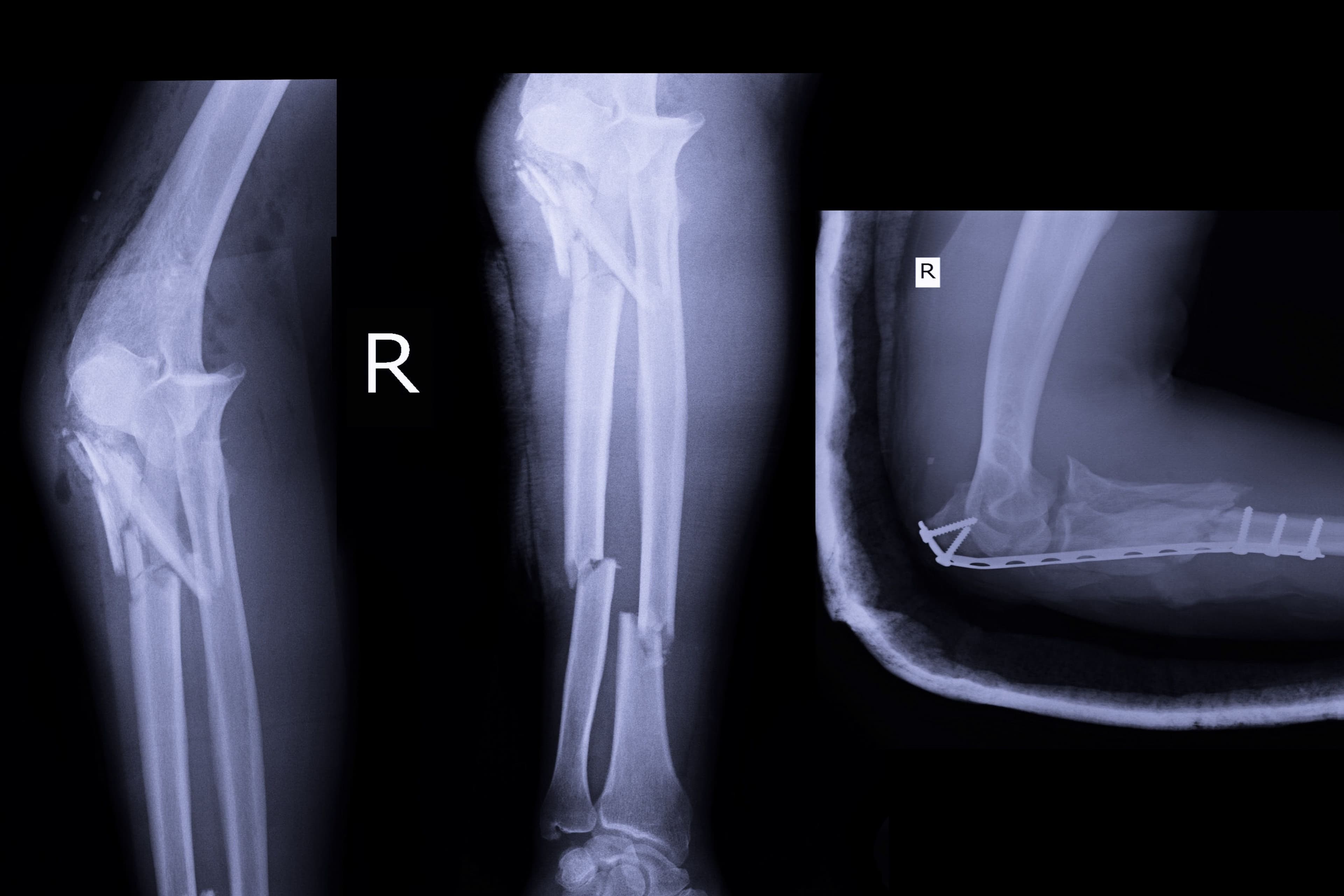
Walking boots or plaster casts: which solution should you choose to immobilise your leg?
When an injury to the foot, ankle or lower leg requires immobilisation, choosing the right device is essential to promote proper healing while maintaining patient comfort and independence. Today, walking boots are becoming a modern alternative to traditional plaster casts, offering many functional, hygienic and practical advantages.
1. Faster functional recovery with a walking boot
Several recent studies have shown that walking boots allow for recovery that is as fast as, or even faster than, plaster casts for certain lower limb injuries(1,2,3). With its curved, non-slip sole, our XLR8 walking boot is designed to provide a natural and comfortable walking experience, promoting a gradual and safe return to walking(1) , which helps maintain muscle activity around the immobilised area.
In contrast, a plaster cast completely immobilises the limb, which can prolong recovery time by up to 12 weeks(1). This total immobilisation can slow down the return to normal foot or ankle function(1,2,3).
2. Mobility and comfort: the advantage of walking boots
Walking boots are designed to promote mobility and reduce stress on the injured limb. They allow for gradual weight-bearing, with or without crutches, depending on the healthcare professional's recommendations and the type of injury being treated . Their design allows for more even pressure distribution when walking(4), which limits skin complications. Their removable nature facilitates monitoring of the limb, reducing the risk of complications such as compartment syndrome (5,6,7).
The rigid shell of our walking boot XLR8 allows immobilisation immobilisation , while the adjustable air cells provide adapted compression , facilitating the reduction of oedema and adapting to the anatomy of the limb.
Conversely, plaster casts make movement difficult and often require the use of crutches. They exert constant pressure on the limb, increasing the risk of skin irritation or complications such as compartment syndrome linked to prolonged immobilisation and the pressure created(5,6) .
3. Hygiene and maintenance: a major advantage of the boot
One of the great strengths of the walking boot is that it is removable(7) . This allows patients to wash themselves, clean the boot or remove the device to sleep (if authorised by their doctor). This ease of access also allows caregivers to regularly check the operated or injured area, promoting safer and simpler monitoring.
A plaster cast, on the other hand, is fixed and cannot be removed. This complicates washing, care and monitoring of the skin. In the event of moisture, cracks or discomfort, a check-up is often necessary to have it redone.
4. Faster return to daily activities
Thanks to the early mobility they allow, walking boots facilitate a quicker return to daily activities — including a return to work for working people(1,8). Patients regain their independence more quickly, which is a key factor in their overall well-being and recovery.
Cast boots, on the other hand, prolong the period of downtime and can delay the return to professional or social activities(1,8), especially for people who travel frequently.
In conclusion
walking boots are now a modern, comfortable and effective solution for immobilising the lower leg. They combine therapeutic support with freedom of movement, while making everyday life easier for both patients and healthcare professionals. Plaster casts still have their place in certain situations requiring strict immobilisation, but for the majority of stable or post-operative injuries, walking boots are the preferred alternative.
This medical device is a regulated health product which, under these regulations, bears the CE mark. Read the instructions for use, indications and contraindications for the product carefully. If in doubt, consult a healthcare professional.
Shahid, Mohammad Kamran, Shahid Punwar, Caroline Boulind, et Gordon Bannister. 2013. « Aircast Walking Boot and Below-Knee Walking Cast for Avulsion Fractures of the Base of the Fifth Metatarsal: A Comparative Cohort Study ». Foot & Ankle International 34 : 75‑79. https://doi.org/10.1177/1071100712460197.
Amaha, K., Arimoto, T., Saito, M., Tasaki, A., & Tsuji, S. (2016). Shorter recovery can be achieved from using walking boot after operative treatment of an ankle fracture. Asia-Pacific Journal of Sports Medicine, Arthroscopy, Rehabilitation and Technology, 7, 10 - 14. https://doi.org/10.1016/j.asmart.2016.09.001
Maempel, J., Clement, N., Duckworth, A., Keenan, O., White, T., & Biant, L. (2020). A Randomized Controlled Trial Comparing Traditional Plaster Cast Rehabilitation With Functional Walking Boot Rehabilitation for Acute Achilles Tendon Ruptures.The American Journal of Sports Medicine, 48, 2755 - 2764. https://doi.org/10.1177/0363546520944905
Glod, D. J., Fettinger, P., & Gibbons, R. W. (1996). A comparison of weightbearing pressures in various postoperative devices. The Journal Of Foot & Ankle Surgery, 35(2), 149‑154. https://doi.org/10.1016/s1067-2516(96)80032-9
Banerjee S, Ryce A. Orthotic Walking Boots for Patients with Fractures or Ligament Injuries: A Review of Clinical Effectiveness and Cost-Effectiveness [Internet]. Ottawa (ON): Canadian Agency for Drugs and Technologies in Health; 2019 Sep 9. Available from: https://www.ncbi.nlm.nih.gov/books/NBK549526/
Torlincasi AM, Lopez RA, Waseem M. Acute Compartment Syndrome. [Updated 2023 Jan 16]. In: StatPearls [Internet]. Treasure Island (FL): StatPearls Publishing; 2025 Jan-. Available from: https://www.ncbi.nlm.nih.gov/books/NBK448124/
E. M. R. (2024). Use of removable support boot versus cast for early mobilisation after ankle fracture surgery: cost effectiveness analysis and qualitative findings of the Ankle Recovery Trial (ART). BMJ Open, 14, e073542. https://doi.org/10.1136/bmjopen-2023-073542
Malleolus fracture: symptoms, treatment and healing time
Malleolus fracture is a common form of ankle fracture. It affects one of the bony reliefs located on each side of the joint: the external malleolus (fibula), the medial malleolus (tibia) or sometimes the posterior malleolus.