Lymphedema is the result of malfunction of the lymphatic system leading to inscreased volume of one or more limbs and/or the external genitalia(1).
The lymphatic system
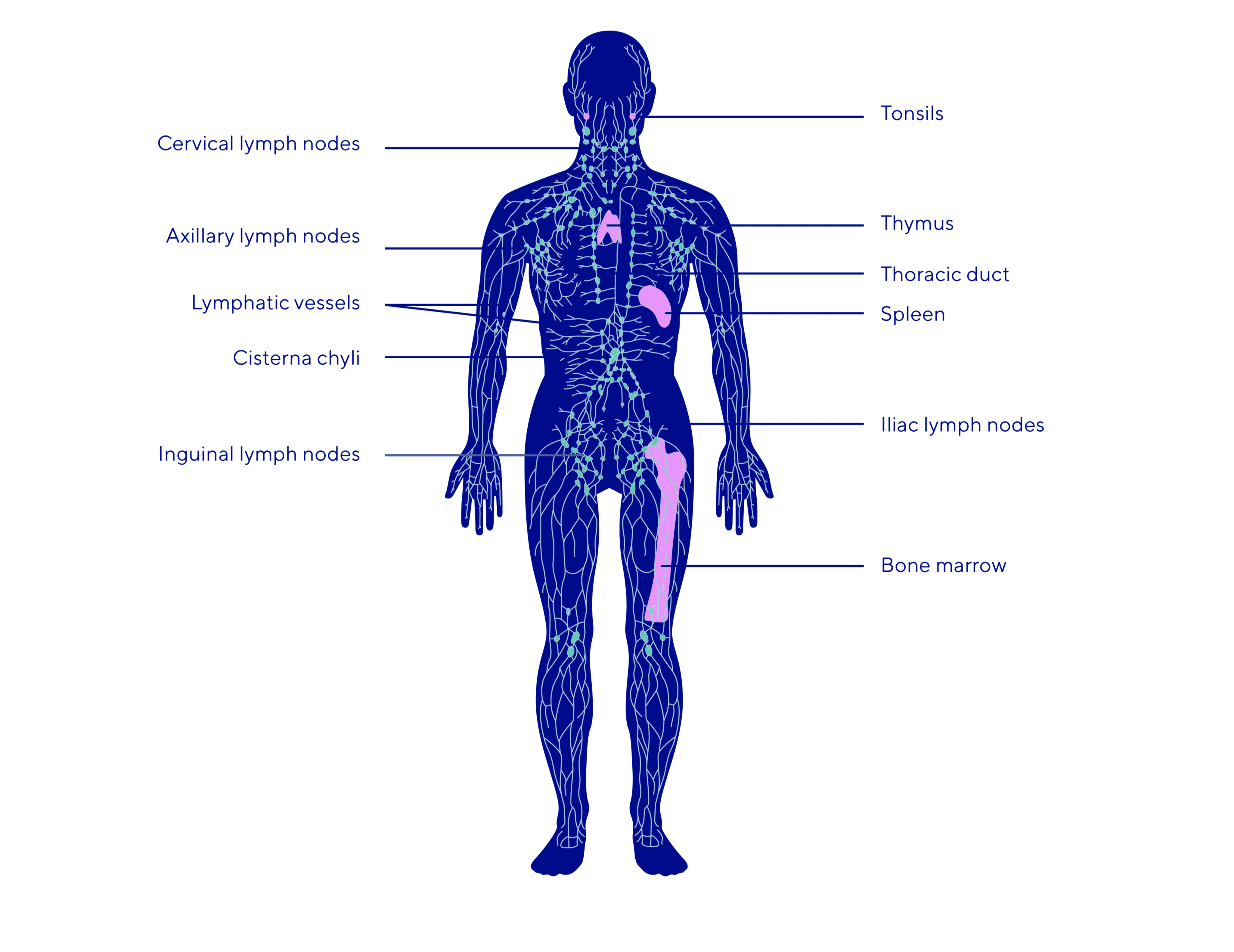
Made up of a series of narrow channels called lymphatic vessels, the lymphatic system helps protect the body against disease and infection. It is the most important part of the immune system(2).
Lymph nodes
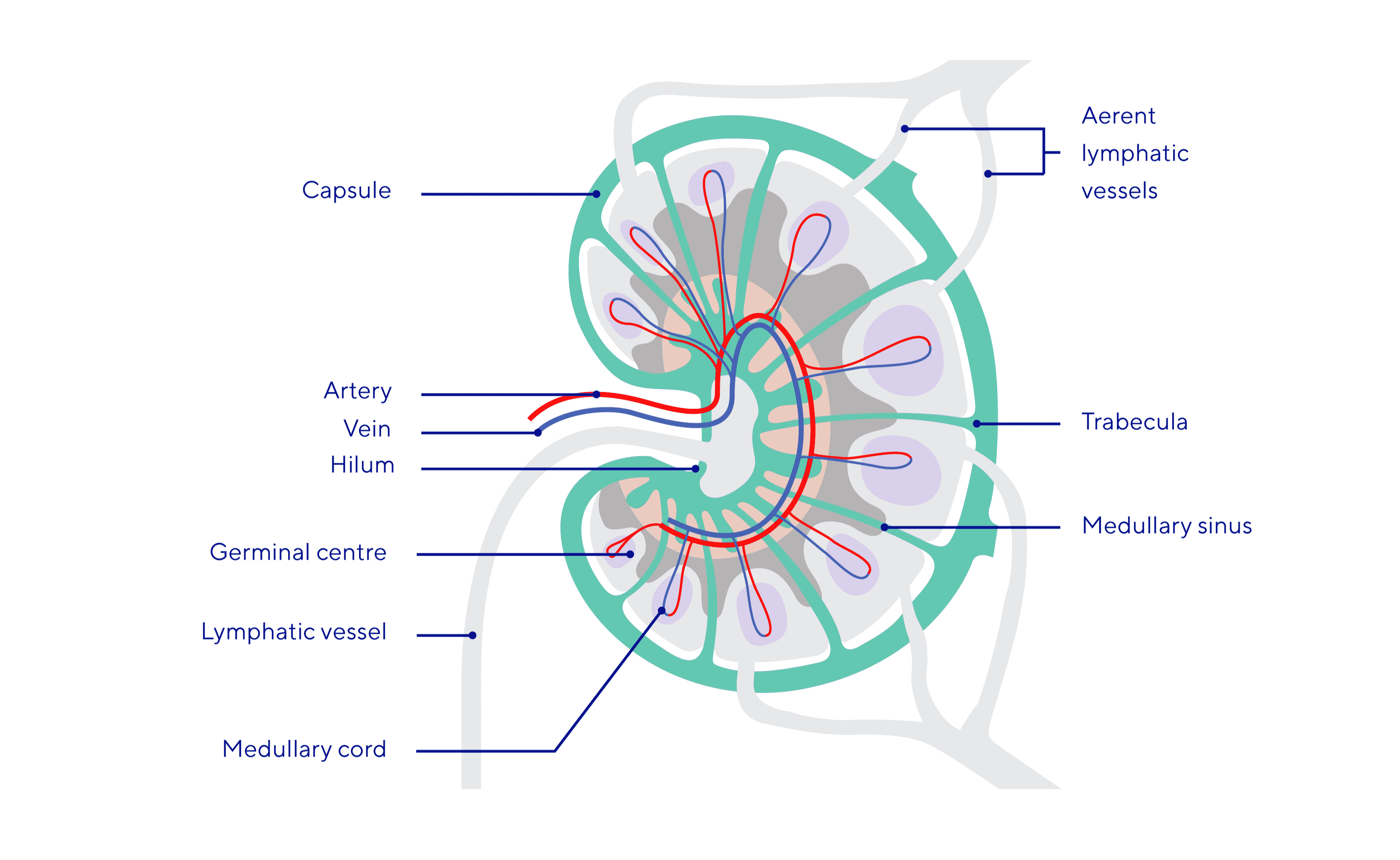
This extensive network, present throughout the body (except in the brain, muscles, cartilage and bone marrow), is composed of lymph nodes: clusters of small bean-shaped organs. There are thousands of lymph nodes distributed throughout the body. They are usually located along veins and arteries(2).
The lymphatic circulation
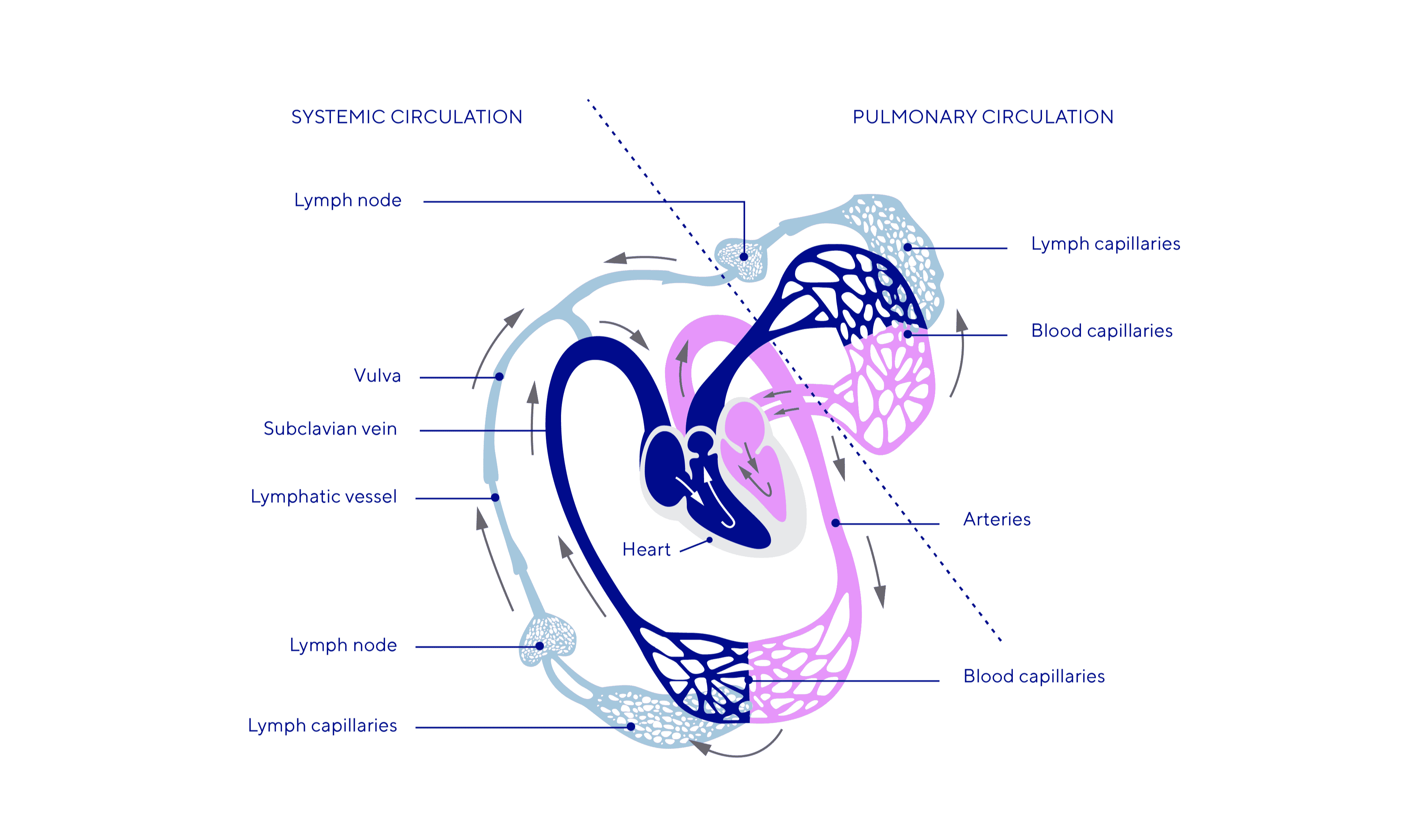
The lymphatic vessels, which form a network throughout the body, carry a fluid that contains white blood cells (or lymphocytes): this fluid is lymph(2).
It is filtered by the lymph nodes and some organs such as the spleen, tonsils, bone marrow and thymus, to extract any bacteria, viruses or other foreign substances(2).
What is lymphedema?
The great majority of lymphedema cases are caused by impairment of the lymphatic system, impeding its circulation, due to a malformation (primary lymphedema), or injury (secondary lymphedema)(1).
La compression médicale dans le traitement du lymphoedème. [Medical compression in the treatment of lymphedema]. Haute Autorité de Santé (French National Authority for Health) website
Le système lymphatique [The lymphatic system]. Institut national du cancer [French National Cancer Institute] website
Lymphedema should not be a barrier to physical activity. On the contrary, sport has been shown to be beneficial in stimulating lymphatic circulation and improving the quality of life of those affected.
Is it possible to get a transplant to treat lymphedema?
Interview with Dr Corinne Becker, a specialized plastic and reconstructive surgeon at the American Hospital in Paris, who developed the autologous lymph node transplantation (ALNT) method.