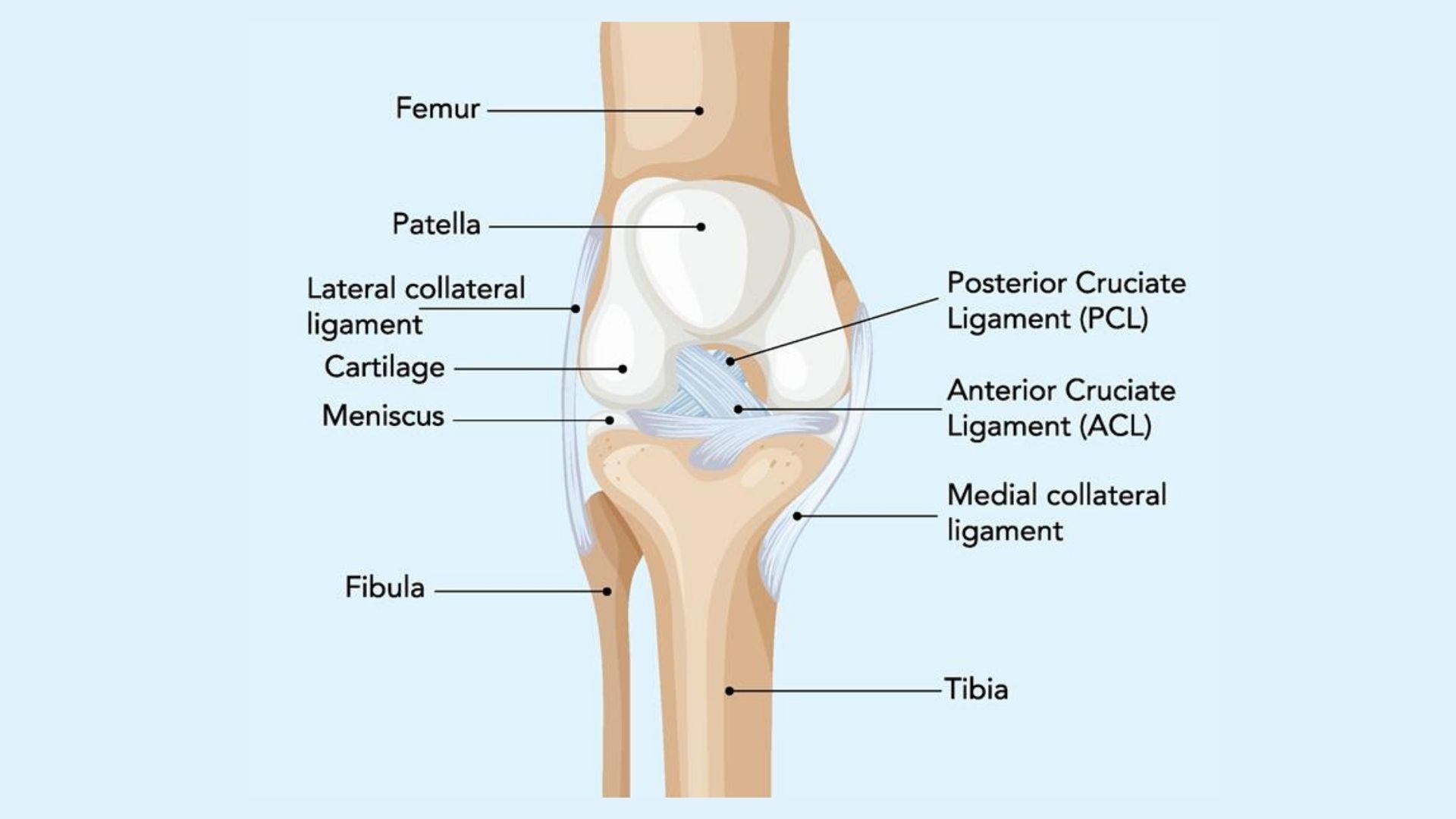
The knee is one of the largest and most complex joints in the human body(1). It connects the femur (thigh bone), tibia (leg bone) and patella, with the help of a network of ligaments, muscles and menisci that provide stability, mobility and shock absorption(1).
This structure allows the knee to flex and extend while supporting the weight of the body when walking, running, or changing direction; Its stability depends on both the passive ligaments and the muscles that surround it(1).
Understanding Knee Sprains
A knee sprain is an injury to one or more ligaments that provide stability to the joint. Ligaments are strong bands of tissue that connect bones together(2). When they are stretched too much or torn because of a sudden movement or impact, it is called a sprain.
The different types of sprains
A knee sprain can affect different ligaments in the knee, each of which plays a specific role in joint stability(2):
Anterior cruciate ligament (ACL) sprain :
ACL sprain is the most common(2), especially among athletes. It often occurs during rapid changes of direction or sudden stops(4).
Posterior cruciate ligament (PCL) sprain
The PCL is usually injured by a direct impact on the flexed knee, such as a fall or frontal impact(5).
Medial Collateral Ligament (MCL) Sprained
MCL sprain is common when an impact on the outer side of the knee, sudden turn, cut or twist(6), especially in sports such as skiing.
Lateral collateral ligament (LCL) sprain
The rarest of these, LCL sprains, are often related to a shock to the inner side of the knee(7).
Symptoms of a knee sprain(2)
The symptoms of a knee sprain vary depending on the severity of the injury, but the most common are: immediate or progressive knee pain, swelling (edema) of the joint, feeling unstable or "loose", stiffness, and difficulty bending or stretching the leg.
Causes of knee sprains(2)
The main causes of a knee sprain are: a wrong movement or a sudden pivot, a fall, a direct impact on the joint, especially during sports activities and repetitive movements with the legs and knees at work.
Risk factors for knee sprains(2,8)
Certain elements can increase the risk of knee sprains: the practice of sports that put a lot of strain on the knee (skiing, football, basketball, etc.), a sudden increase in sports exercises, a history of knee injury.
The different stages of severity of a knee sprain
The knee sprain is not always identical: its severity varies according to the severity of the ligament damage and the ligaments affected.
1. Mild sprain
Benign sprain(9) :
This is when one of the ligaments is stretched, without significant tearing of the ligament fibers. In this case, the stability of the knee is little affected and recovery is usually quick with conservative treatment.
2. Medium severity sprain
Medium sprain(9) :
It occurs when only part of the fibers of a ligament are torn. The pain is more pronounced, the swelling may be more severe and it may be necessary to adapt the management (rest, rehabilitation).
3. Severe sprain
Severe sprain(9) :
A sprain is considered serious when a ligament is completely ruptured. This type of injury often leads to instability of the knee and may require more intensive management, sometimes surgical depending on the clinical case.
Severity depending on the affected ligaments
The severity of a sprain also depends on the type of ligament affected(9):
Isolated injuries to the lateral ligaments (such as the medial and external collateral ligaments) are generally lessserious.
On the other hand, damage to a cruciate ligament (often the anterior cruciate ligament), either alone or in combination with other injuries, is considered more serious, as it can cause significant instability of the knee.
In the most severe situations, with several ruptured ligaments, the joint can lose its normal hold and shift from its axis, which is called a knee dislocation.
What to do and how to treat a sprain?
The management of a knee sprain depends mainly on the severity of the injury, the pain and the joint instability observed after the trauma.
Mild and moderate sprain(10)
The treatment is most often functional. It is based on immobilizing the knee in a removable splint for about 6 weeks, allowing both pain relief and the healing of the ligament in the right position. At the same time, regular application of ice and prescription of anti-inflammatories or analgesics help to control inflammation. As soon as the pain subsides (about 5 days after the accident), physiotherapy rehabilitation is started to restore joint range, muscle strength and stability through proprioceptive work.
Severe sprain(10)
When a ligament is completely ruptured or there is marked instability, more specialized management is necessary. Treatment is most often surgical in young, physically active patients, especially in cases of anterior cruciate ligament rupture.
What is the role of the physiotherapist in knee sprain?
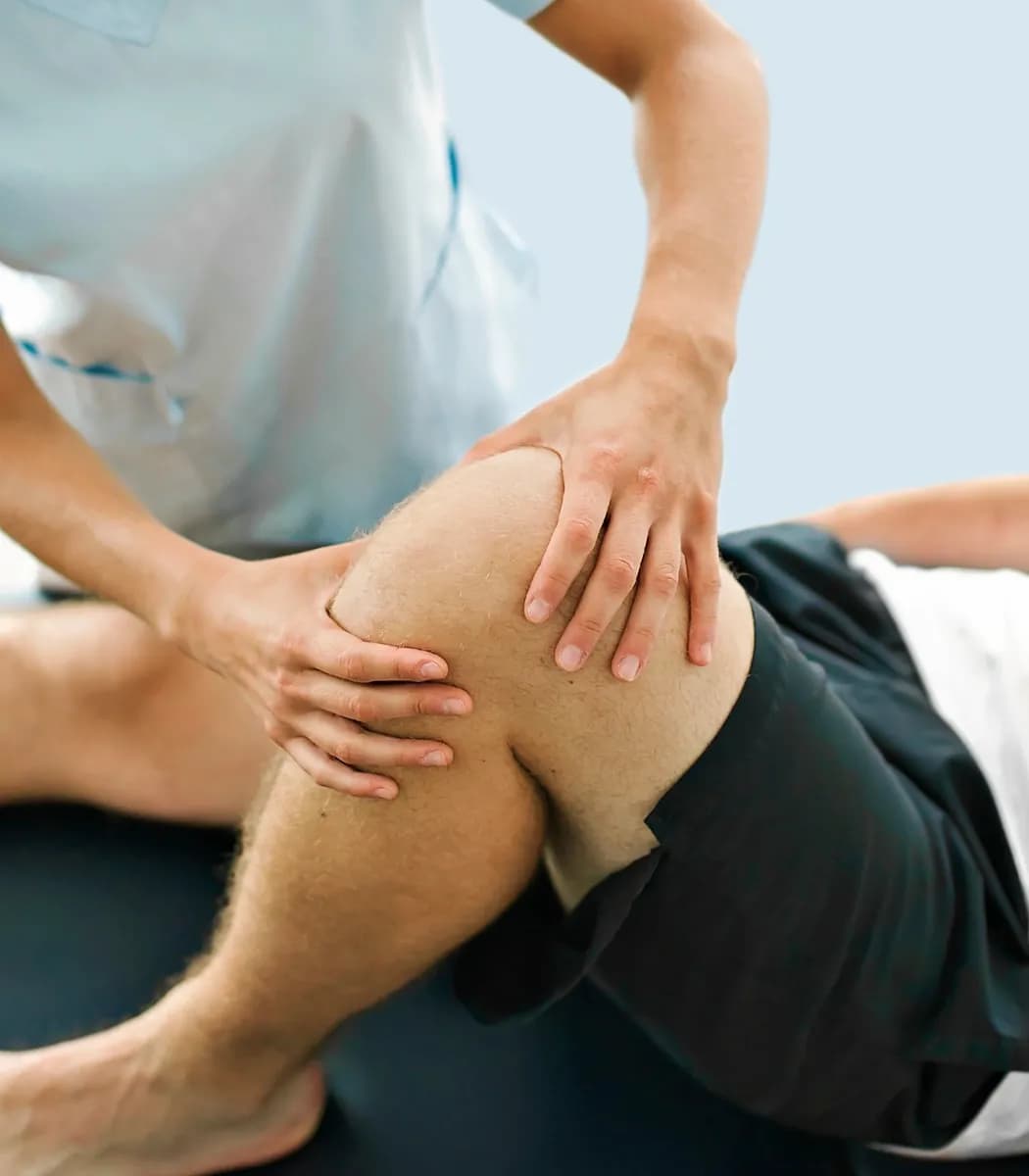
The physiotherapist plays a central role in the management of knee ligament injuries, he makes it possible to combine supervised rehabilitation and exercises at home(11).
From the first phases, the physiotherapist accompanies the patient in the gradual resumption of movement and support, in order to improve joint amplitude, limit pain and regain full extension of the knee.
Over the course of the sessions, the physiotherapist sets up a therapeutic exercise programme aimed at activating and strengthening the muscles that support the knee. In some cases, neuromuscular stimulation may be used to improve muscle strength and function(11).
Rehabilitation also includes specific work on coordination, stability, confidence in movement and overall function, often referred to as neuromuscular rehabilitation. This work is essential to promote a gradual return to physical and daily activities(11).
FAQ
Knee braces can play a role of support and mechanical protection after a knee sprain, especially in the case of ligament injuries(12). They can also help limit certain risky movements, reduce stress on the ligaments and improve the sense of stability in some patients(12) However, the current data do not allow us to conclude a clear and systematic clinical benefit, the level of evidence is limited and the protocols are heterogeneous.
Your physical therapist can prescribe exercises to activate and strengthen the muscles and will progress you through these exercises over several months, usually up to 6 to 10months(11,13) especially after knee surgery, such as ligament reconstruction.
Depending on the pain, the severity of the sprain, and your doctor's recommendations, it is possible to walk and put weight on your leg(14). In the early stages you can use a cane or crutches to make walking easier(14).
Can we drive? It is important to consult your doctor beforehand. It is possible to drive if you are no longer wearing a splint(14), if you do not have difficulty walking(14), and if an emergency brake does not generate pain(14).
Yaras RJ, O'Neill N, Mabrouk A, Yaish AM. Lateral Collateral Ligament Knee Injury. 2024 Feb 27. In: StatPearls [Internet]. Treasure Island (FL): StatPearls Publishing; 2025 Jan–. PMID: 32809682.
Falkowski, W., Gaszyńska, M., Drzewiecka, A., Drzewiecki, A., Korczak, W., Madejska, M., Rudzka, A., Krysińska, A., Woźniak, W., & Magielski, J. (2025). Physical Activity and Knee Joint Injuries - Risk Factors, Management and Prognosis. Journal of Education, Health and Sport. https://doi.org/10.12775/jehs.2025.80.59973.
Siegrist, O. The Management of Knee Sprains, Med Hyg, Vol. 59, no. 2373, 2001, pp. 2516–2520.
Knee Ligament Sprains and Tears: Clinical Practice Guidelines—Ensuring Best Care. (2017). Journal of Orthopaedic and Sports Physical Therapy, 47(11), 824. https://doi.org/10.2519/jospt.2017.0511
Chew, K. T. L., Lew, H. L., Date, E., & Fredericson, M. (2007). Current evidence and clinical applications of therapeutic knee braces. American Journal of Physical Medicine & Rehabilitation, 86(8), 678–686. https://doi.org/10.1097/phm.0b013e318114e416
Logerstedt, D. S., Scalzitti, D., Risberg, M. A., Engebretsen, L., Webster, K. E., Feller, J., Snyder-Mackler, L., Axe, M. J., & McDonough, C. M. (2017). Knee stability and Movement coordination Impairments: Knee Ligament sprain Revision 2017. Journal of Orthopaedic and Sports Physical Therapy, 47(11), A1–A47. https://doi.org/10.2519/jospt.2017.0303
Ruptured cruciate ligaments, particularly the anterior cruciate ligament (ACL), can be treated using different approaches depending on the severity of the injury, the patient's lifestyle and recovery goals.