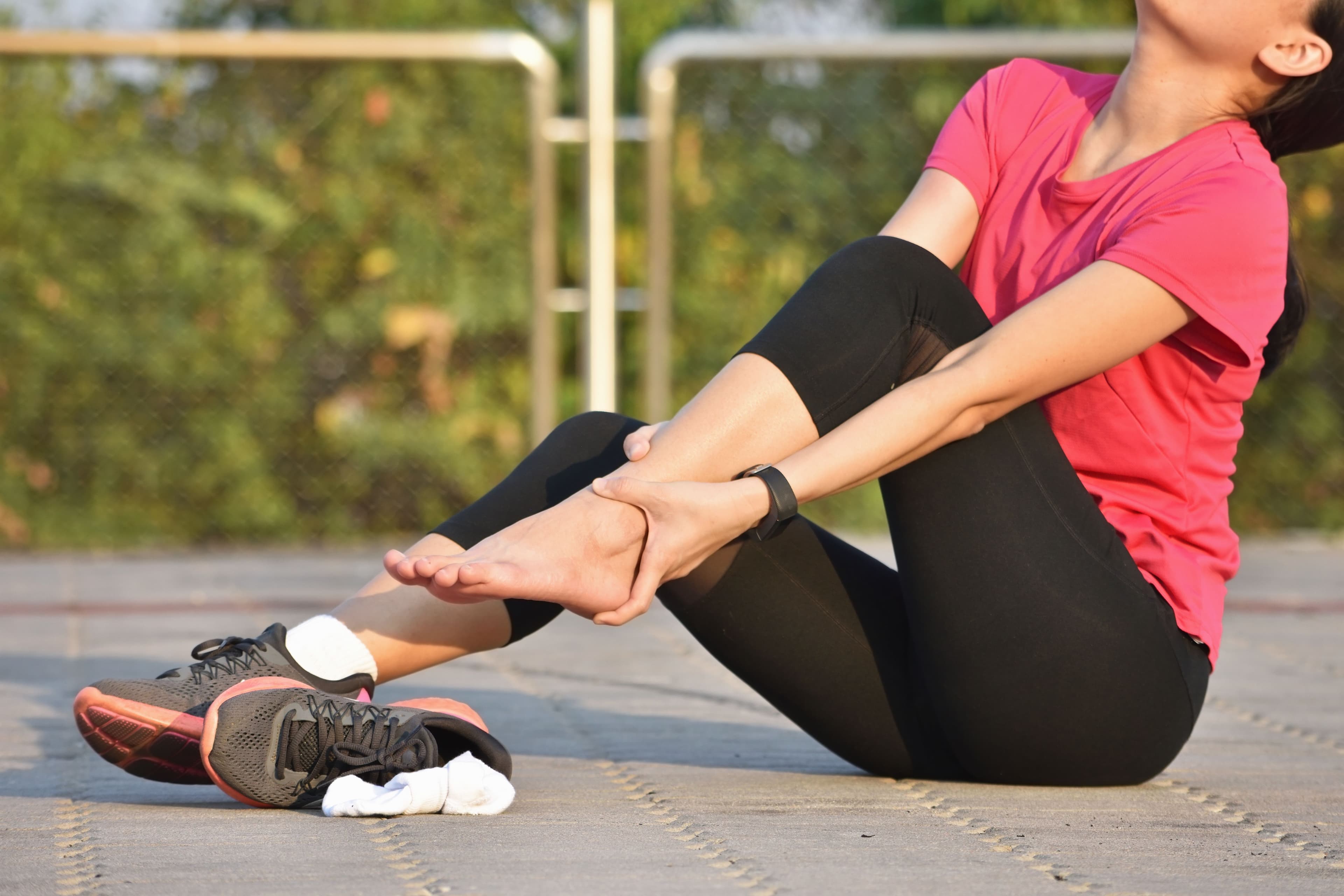
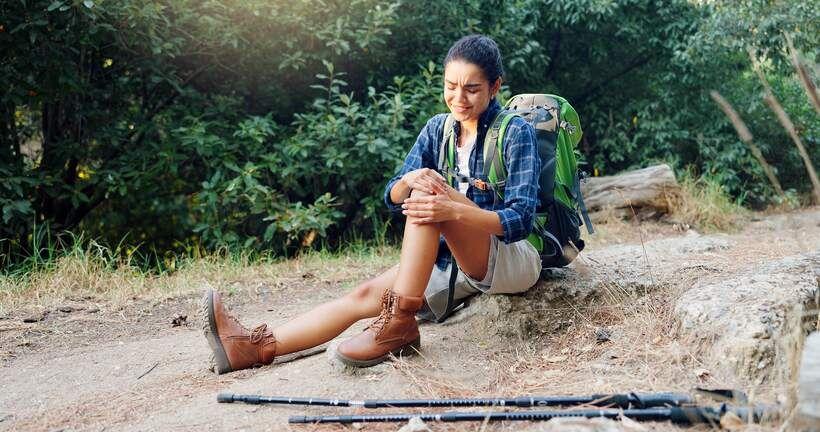
After a knee sprain, getting back into sport is not random. Even though the pain decreases quickly, the knee needs time to regain its strength, stability and coordination. A recovery too quickly increases the risk of a new injury.
The objective is simple: to resume physical activity in complete safety, with a strong and stable knee.
How to return to sport after a knee sprain? (1)
Before talking about sport, we must talk about evaluation.
A recent scientific review highlights the importance of a real battery of tests before returning to sport. It is not enough to wait a few weeks. Experts recommend assessing:
Quadriceps strength (muscle located at the front of the thigh), essential for stabilizing the knee
"Hop tests" to assess lower limb function and symmetry between the two legs
The quality of landings, in order to analyze the biomechanics of movement
Neuromuscular balance and control
The person's feelings through questionnaires, because trust plays a key role in the recovery
The return to sport must therefore be based on objective criteria and not only on the time elapsed since the injury.
When can we resume sport?
A resumption may be considered when:
The pain and swelling are gone (2)
Range of motion is complete (2)
The strength and function of the injured leg is almost equivalent to the other (3)
The knee is stable (3)
Functional tests are satisfactory (3)
The person feels confident with their knee (3)
Clinical guidelines emphasize an important point: it is not a question of the number of weeks, but of actual recovery.
Which sport to choose after a knee sprain?3
After a knee sprain, the resumption of sport should always be done gradually and ideally with the advice of a health professional, even in the absence of surgery. Even if the pain decreases, the knee needs time to regain its mobility, strength and stability.
Before thinking about resuming a sports activity, certain rehabilitation steps are essential.
Gradually resuming physical activity
The first step is to regain good knee mobility. 3) The joint must be able to bend and extend properly, without significant pain.
Then, the resumption of walking and weight bearing is done gradually (3), depending on the pain. This step allows you to regain natural movement and get the knee used to supporting the weight of the body again.
Rehabilitation also includes muscle-strengthening exercises(3), especially for the thigh muscles that contribute to knee stability.
Finally, it is important to work on balance and coordination(3). These exercises help to improve knee control and reduce the risk of a new sprain when returning to sport.
However, during therecovery phase, some activities with high stress on the knee may be temporarily limited.
Start with low-impact activities
Initially, it is recommended to favor gentle sports, which solicit the knee without causing significant shocks.
The exercise bike is often the first sport recommended after a knee sprain. It allows you to resume physical activity while limiting the strain on the knee. (4)
Swimming is also very suitable. Water reduces the weight of the body and decreases the pressure on the joint. The front crawl and back crawl are generally better tolerated than the breaststroke, which can put more strain on the medial ligament. (4)
Active walking can be resumed gradually, provided that there is no pain or swelling.
These activities allow you to work on endurance and muscle strength without exposing the knee to sudden movements.
Gradually resume running
Running can be resumed when the knee has regained good recovery according to the criteria mentioned above, with a mobile, stable joint that is strong enough to withstand the effort.
The resumption is done on flat ground, with short and progressive sessions. It is advisable to alternate walking and running at the beginning. An increase in volume or intensity too quickly can promote a recurrence. (4)
Which sports require more precautions?
Some sports put more strain on the knee ligaments. This is especially the case for activities that involve rapid changes of direction or pivots, such as football, basketball, or handball. (4)
These sports should only be resumed when the knee has recovered sufficiently and with the doctor's agreement (3). Resuming too soon can increase the risk of a new sprain or more serious injury.
Skiing should be avoided for a year. (4)
Adapting the sport to its level and history
Every knee sprain is different. The type of ligament affected, the severity of the injury, the age, the level of sport and the quality of rehabilitation influence the choice of sport.
In all cases, the return to sport after a knee sprain must be:
Progressive
Ideally accompanied by a health professional
Customized
A program of muscle strengthening, balance work and coordination remains essential before returning to an intense sport.
Should you wear a knee brace when resuming?
After a knee sprain, it may be advisable to wear a knee brace when resuming a sports activity, especially in the event of a medial ligament sprain. (5) This type of device can help stabilize the joint and limit certain movements that could put excessive strain on the still weakened ligaments.
The knee brace can also provide a sense of security when returning to sport. This feeling of support can help some people gradually regain confidence in their knee.
However, it is important to remember that a knee brace is not a substitute for rehabilitation. It should be used in addition to muscle strengthening, balance and coordination exercises, which remain essential to regain a stable and functional knee. (5)
In non-surgical care, wearing a functional knee brace can facilitate the gradual resumption of activity, under medical supervision.
Traci Smiley, Johnathan Dallman, Rachel Long, Mason Kapple, Levi Aldag, Anthony Mok, Christopher Bernard, Kyle Martin, Lisa Vopat, Bryan Vopat, Lower extremity return to sport testing: A systematic review, The Knee, Volume 50, 2024, Pages 115-146, ISSN 0968-0160, https://doi.org/10.1016/j.knee.2024.07.021.
Knee Ligament Sprains and Tears: Clinical Practice Guidelines—Ensuring Best Care. (2017). Journal of Orthopaedic and Sports Physical Therapy, 47(11), 824. https://doi.org/10.2519/jospt.2017.0511
Knee Stability and Movement Coordination Impairments: Knee Ligament Sprain Revision 2017 David S. Logerstedt, David Scalzitti, May Arna Risberg, Lars Engebretsen, Kate E. Webster, Julian Feller, Lynn Snyder-Mackler, Michael J. Axe, and Christine M. McDonough. Journal of Orthopaedic & Sports Physical Therapy 2017 47:11, A1-A47
Chapman G, Vij N, LaPrade R, et al. (March 19, 2023) Medial-Sided Ligamentous Injuries of the Athlete's Knee: Evaluation and Management. Cureus 15(3): E36360. doi:10.7759/cureus.36360
Sport is a healthy activity. However, it can also lead to injury. One of the most common is ankle sprains (1). This is where the RICE protocol comes in. It is a widely recommended method of first aid (2). It is used for the initial treatment of sports injuries. In this article, we will explore this protocol in detail. We will see how it can be your ally against sports injuries, but not only.