When the first snowflakes start to fall, winter sports enthusiasts can't wait to put on their skis or snowboard again. But for those who have already experienced knee pain, joint instability or a previous injury, hitting the slopes can be accompanied by hesitation.
How to protect your knees while skiing?
Skiing and snowboarding put a lot of strain on your joints(1), especially your knees. Every turn, landing, or uneven surface generates forces that can lead to injuries such as ligament tears(1) and sprains(1).
A knee brace helps with:
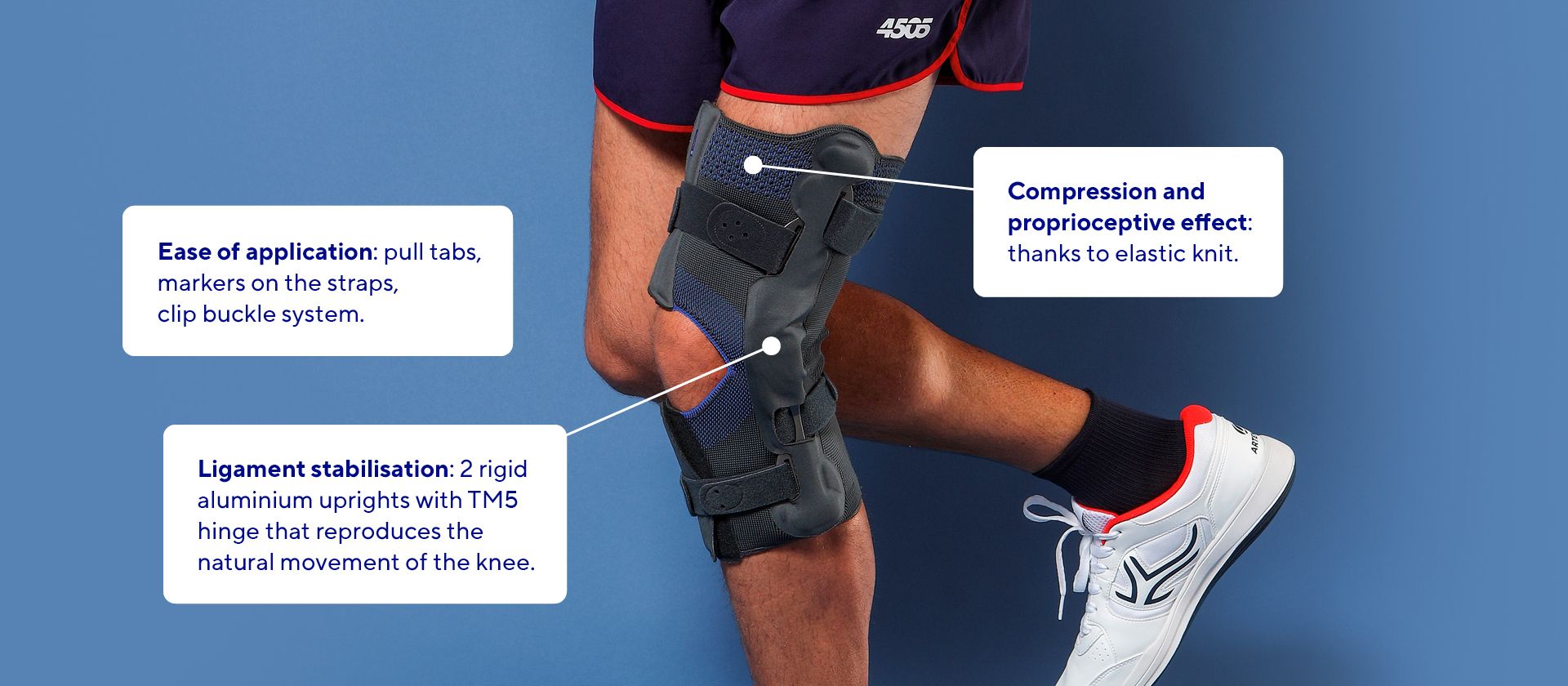
Stabilization: It limits excessive movement(2) that could put too much strain on the ligaments, including the ACL* and MCL**, especially in cases of instability or a history of injury.
Compression: Gentle pressure reduces edema(3), improves blood and lymphatic circulation(4) and keeps the joint warm(3).
Proprioception(4): By slightly increasing joint awareness, a splint helps your body react more quickly to sudden movements or loss of balance.
Pain relief(4): By improving alignment and reducing certain mechanical loads, a knee brace can reduce painful stress around the knee.
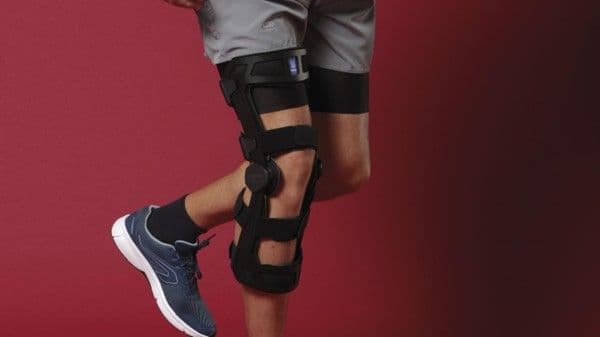
Thuasne® knee pads, such as those in the Genu Ligaflex® range, combine compressive elastic knit, stiff boning for ligament stabilization and an anatomical shape to provide a suitable support5.
The Ligastrap® Genu is suitable for resuming a sports activity, comfortable(6) and easy to use(7).
Is skiing good for the knees?
Every winter, ski resorts treat thousands of injuries, and knees account for a large portion of them(8).
What for? Because skis and snowboards act as levers. When you fall or lose your balance, you put extreme pressure on the knee ligaments and surrounding muscles(9).
In amateur alpine skiers with a knee injury, the most common associated injuries are:
Ligament tears such as ACL*, which are involved in approximately 50% of all serious knee injuries(9,10) These injuries may be accompanied by concomitant lesions of other joint structures of the knee, namely lesions of the MCL**, MM and LCL.
These injuries can happen to anyone, from beginners to seasoned athletes, especially when fatigue sets in or when the muscles are not well prepared for the physical load(11).
Train and ski more serenely
To make the most of your winter holiday, prepare yourself weeks before hitting the slopes(11):
Strengthen your leg muscles to improve joint control.
Work on balance and coordination to better react on rough terrain.
Ask a physiotherapist or trainer for targeted exercises if you have had an injury.
And don't forget to always start with a gentle warm-up run before tackling the tough tracks.
Choosing and testing your knee brace
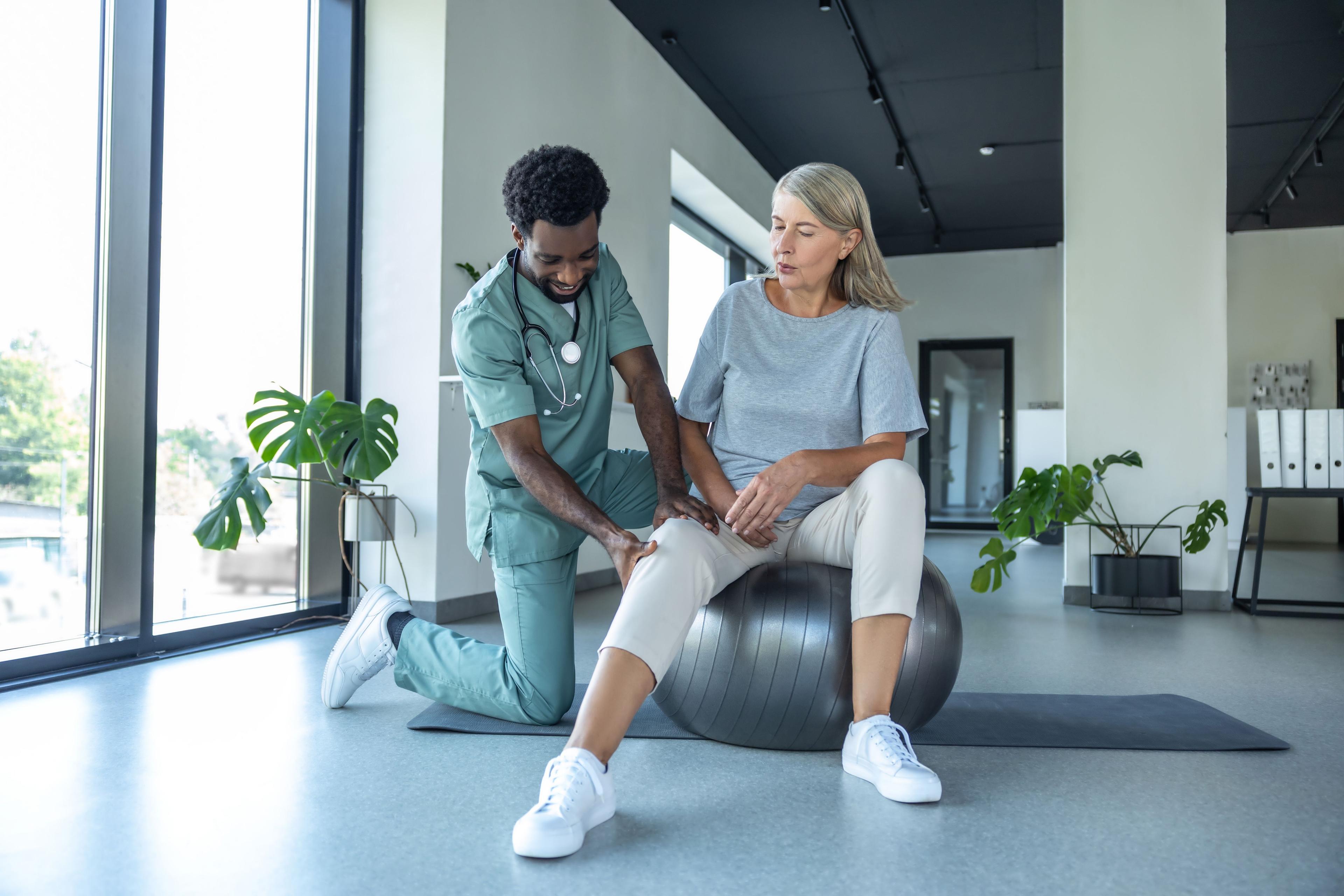
First of all, in the event of an injury, operation or chronic illness, it is essential to seek advice from a health professional on the choice of the knee brace and to follow his recommendations before resuming a sports activity.
The choice of a knee brace depends on several factors :
The nature of your problem: recent injury, chronic pathology or simple discomfort on a daily basis.
Your activity level: occasional, regular or intensive.
Your objectives of use:
Therapeutic : after surgery or healing from an injury.
Preventive : if you feel unsteady or weak.
Support : for long, intense days of skiing ... or even for the short ones.
If you decide to use a knee brace:
Try it before your trip: Wear it during light exercise or a gym workout to get used to it.
Check for comfort: Adjust the straps for a firm but comfortable fit.
Be patient: It may take a few days to get used to the feeling of extra support.
Support for your ski holiday
A knee brace doesn't eliminate the risk of injury, but it can give you extra support, help build your confidence.
Posch, M., Schranz, A., Lener, M., Tecklenburg, K., Burtscher, M., & Ruedl, G. (2020). In recreational alpine skiing, the ACL is mainly injured in all knee injuries requiring hospitalization. Knee Surgery, Sports Traumatology, Arthroscopy, 29, 1790 - 1796. https://doi.org/10.1007/s00167-020-06221-z.
Ateschrang, A., Döbele, S., Freude, T., Stöckle, U., Schröter, S., & Kraus, T. (2016). Acute MCL and ACL injuries: first results of minimally invasive MCL ligament splint with combined ACL reconstruction in a single bundle. Archives of Orthopedic and Traumatological Surgery, 136, 1265-1272. https://doi.org/10.1007/s00402-016-2497-6.
Zuj, K., Prince, C., Hughson, R., & Peterson, S. (2018). Improved muscle blood flow with intermittent pneumatic compression of the lower leg during plantar flexion exercise and recovery. Journal of Applied Physiology, 124 2, 302-311 . https://doi.org/10.1152/japplphysiol.00784.2017.
Raja, Kavitha MS, PT, PhD ; Dewan, Neha MPT. Effectiveness of knee braces and foot orthotics in the conservative management of osteoarthritis of the knee: a systematic review. American Journal of Physical Medicine & Rehabilitation 90(3):p 247-262, March 2011. | DOI: 10.1097/PHM.0b013e318206386b
Internal CE Marking Data
Comfort: anatomically shaped knit with comfort zones in the popliteal hollow and patella
3 Numbered points on patented straps and pulls
Shea KG, Archibald-Seiffer N, Murdock E, Grimm NL, Jacobs JC Jr, Willick S, Van Houten H. Knee injuries in alpine skiers: a 6-year survey study. Orthop J Sports Med. January 22, 2014; 2(1):2325967113519741. DOI: 10.1177/2325967113519741. PMID: 26535269; PMCID: PMC4555526.
Posch, M., Schranz, A., Lener, M., Tecklenburg, K., Burtscher, M., & Ruedl, G. (2020). In recreational alpine skiing, the ACL is mainly injured in all knee injuries requiring hospitalization. Knee Surgery, Sports Traumatology, Arthroscopy, 29, 1790 - 1796. https://doi.org/10.1007/s00167-020-06221-z.
Owens, B. D., Nacca, C., Harris, A. P., & Feller, R. J. (2017). Comprehensive review of skiing and snowboarding injuries. Journal of the American Academy of Orthopaedic Surgeons, 26(1), e1–e10. https://doi.org/10.5435/jaaos-d-16-00832
Owens, B., Nacca, C., Harris, A., & Feller, R. (2018). Comprehensive review of skiing and snowboarding injuries. The Journal of the American Academy of Orthopaedic Surgeons, 26 1, e1-e10 . https://doi.org/10.5435/jaaos-d-16-00832.
How long does rehabilitation for an anterior cruciate ligament injury take?
Anterior cruciate ligament (ACL) rupture is a common injury, particularly among athletes. It requires long-term, structured treatment, whether or not surgery is involved.
Ruptured cruciate ligaments, particularly the anterior cruciate ligament (ACL), can be treated using different approaches depending on the severity of the injury, the patient's lifestyle and recovery goals.
The knee is a system made up of bones, ligaments, tendons and cartilage that ensures both static posture and walking. Its mobility is based on a combination of rolling and sliding. Knee pathologies are mainly traumatic (sprain or rupture of the cruciate ligament) or degenerative (osteoarthritis).