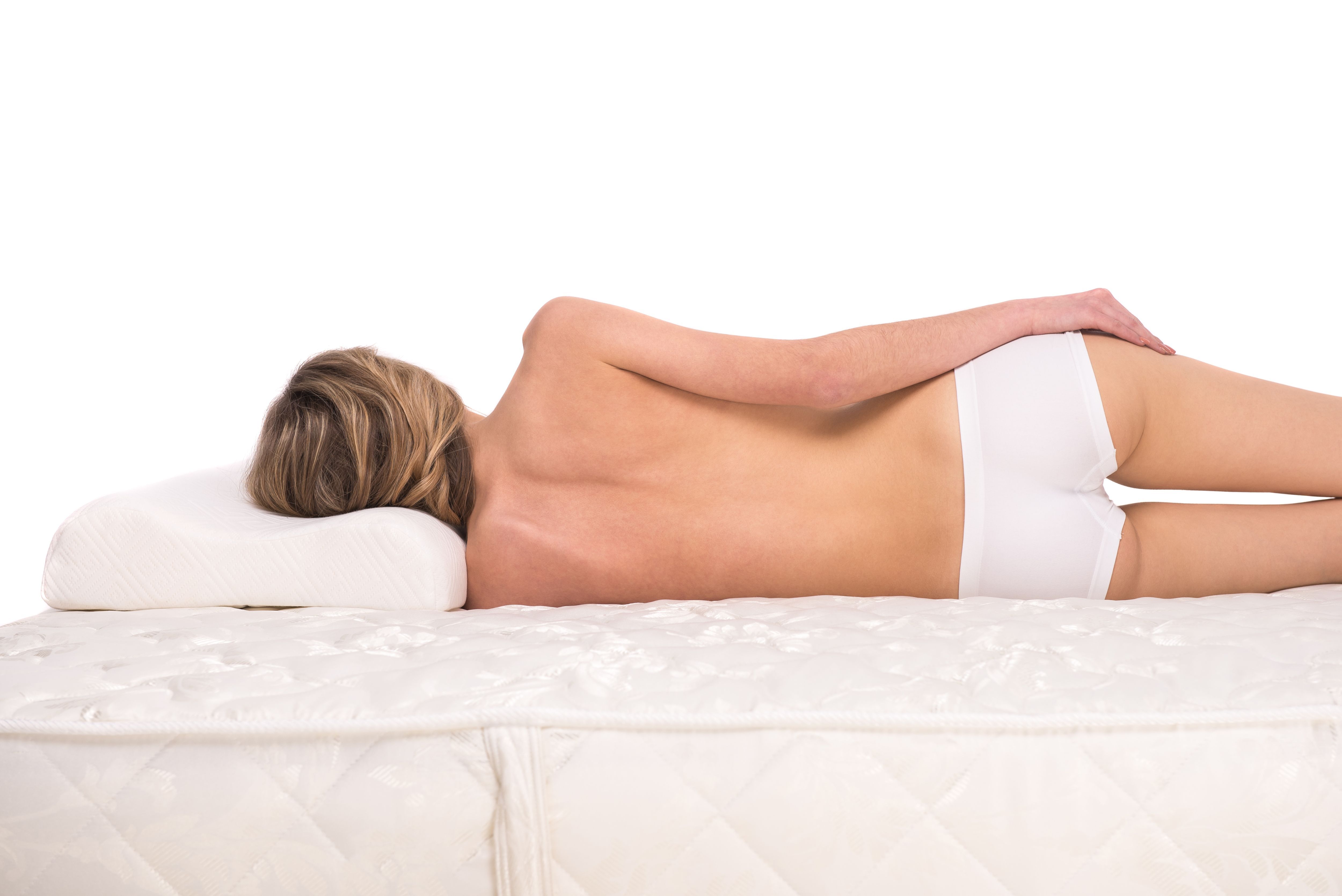
For a long time, it was believed that a very firm mattress was an indicated treatment for back pain. Numerous studies have since contradicted this belief. To avoid or relieve back pain, a mattress must be chosen on a case-by-case basis, and replaced regularly!
Bedding, sleep quality and back pain are intimately linked: a mattress that is too hard can aggravate or even cause back pain. In 2003, a Spanish study already made this observation: a mattress of medium firmness seemed to improve pain and disability in patients suffering from chronic low back pain, compared to a firm mattress.(1)
In their conclusions, the researchers also noted that replacing the usual bed with a new mattress, whether firm or semi-firm, had led to an improvement in pain and disability in the patients tested.
A "tailor-made" mattress
When you suffer from low back pain and want to renew your mattress, it's difficult to sort it out. Firm, semi-firm or soft? Spring or foam? Shape memory? What about those presented as "anti-back pain"? In reality, the choice of a mattress must be made "tailor-made", taking into account several parameters: the weight of the sleeper, his height, but also his sleeping position and the existence or not of a partner sleeping in the same bed.
A 2010 study concluded that it was possible to reduce back pain by adopting a mattress specially adapted to each subject's sleeping position(2). A good mattress is one that supports the spine in a natural position, offers back support and comfort that will ensure quality sleep. The one on which "we feel good".
Some tips for choosing the right one
It is generally necessary to avoid mattresses that are too firm, as well as those that are too soft, and to favor "semi-firm" ones. If you are overweight, you can also opt for a bed with a higher density. Of course, you will choose the dimensions of the bed according to its size.
Foam, latex or springs, the composition of the mattress would not have a great impact on the quality of sleep and back pain, as long as it is dense enough and of good quality. However, a memory foam mattress can sometimes be indicated in case of back pain, as it perfectly maintains the alignment of the spine, and avoids painful pressure points(3).
When choosing a mattress, the main thing is to trust yourself! You will have to try each bed, for a few minutes and varying the positions. To make sure you don't make a mistake, many sellers offer to test the mattress over a period of several weeks or even months. Finally, a mattress needs to be changed regularly, every 7 to 10 years: it has been proven that a new mattress significantly improves the quality of sleep, and thus helps to reduce or avoid back pain.
Box spring, pillow and position to limit back pain
The mattress is not everything! The bed base is also important. Of good quality, it will cushion some of the movements and ensure a longer longevity of the mattress.
The choice of pillow can also make a difference. Just like the mattress, you will have to try it before buying it. There is no point in having more than one, because you must avoid raising your head too much. In case of neck, shoulder or cervical vertebrae pain, it is possible to opt for an ergonomic pillow.
Finally, certain positions ensure better sleep and recovery. This is the case of the position on your back, with your arms at your sides, even if it is not the most common. It ensures a peaceful sleep, and reduced movement during sleep.
When you have Back pain, you may feel less like having sex, because you are afraid of Pain or of making your Pain worse. But some positions may help limit pressure on the Lumbar area. They may help you keep a fulfilling sex life Without waking up Pain or making it worse.