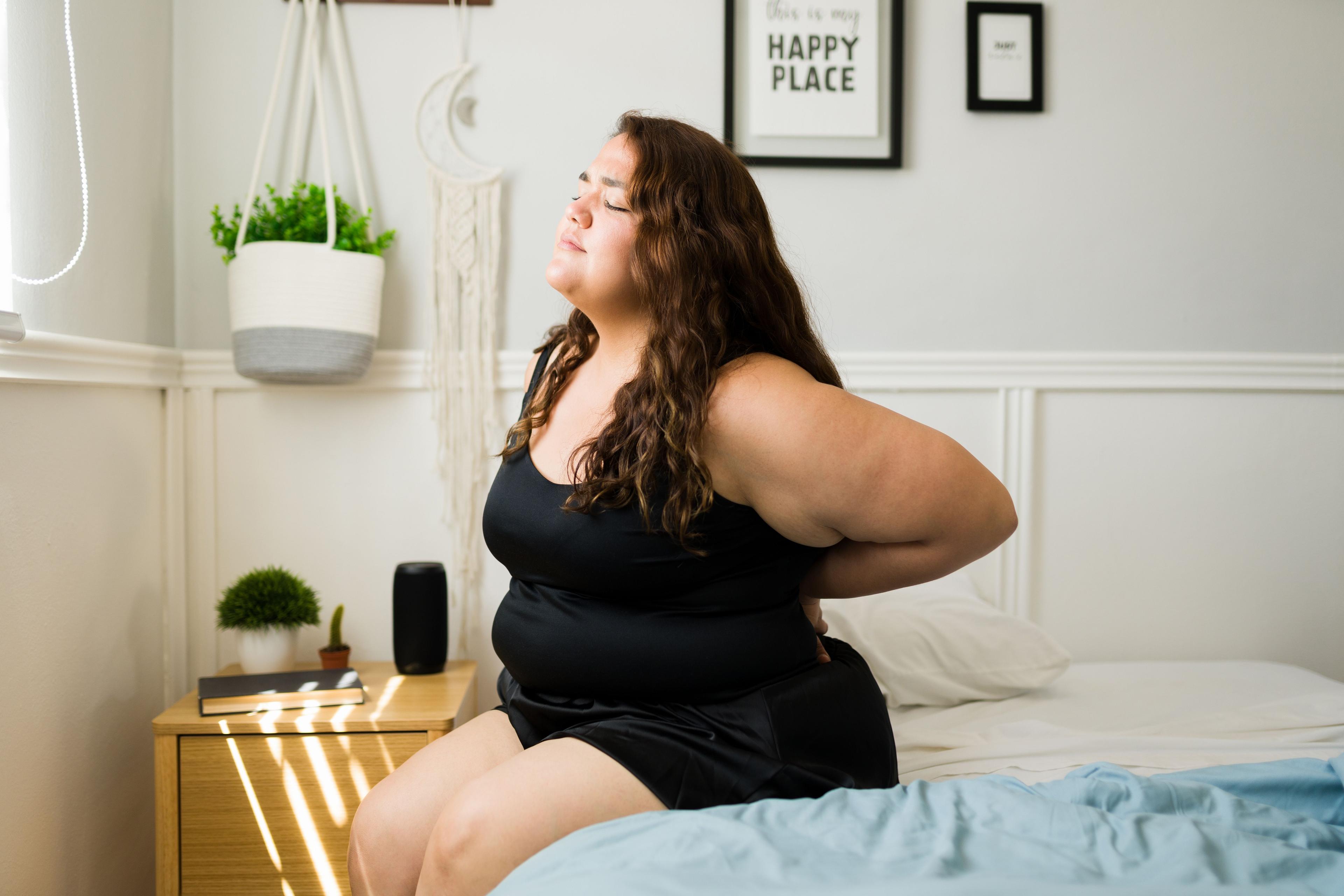
After ostomy surgery, such as a colostomy, ileostomy, or urostomy, patients may sometimes experience complications like parastomal hernias (i.e., swelling around the stoma) or abdominal pain.
An abdominal support belt is intended to accompany ostomy patients by providing them with daily support. Let's find out in detail the advantages and best practices of an abdominal support belt after this type of operation.
What is an ostomy?
An ostomy is the result of a surgical procedure that involves creating an artificial opening in the skin. This will allow waste products such as stool or urine to exit the body via a special bag(1).
Recentestimates indicate that 1.3 million patients have an ostomy worldwide(2).
It is an intervention often used when the digestive or urinary system no longer functions normally. There are different types of stoma among the many that exist:
A colostomy is an opening created to drain stool from the large intestine. Part of the colon (large intestine) is connected to an opening in the abdomen to allow stool to pass.
The ileostomy is an opening created to drain stool from the small intestine. Part of the ileum (the last section of the small intestine) is connected to an opening in the abdomen to evacuate waste, which is often more liquid than in a colostomy.
The urostomy is an opening created to drain urine. Used when the bladder no longer works or has been removed, it allows urine to be evacuated either directly via the ureters connected to the abdominal wall, or via a segment of the intestine connected to the ureters
What is an abdominal support belt?
An abdominal support belt is a medical device designed to provide proper compression and support to the abdominal wall.
They are commonly used in many situations. As part of perioperative care, especially in the 3 months following abdominal surgeries. They are also used as support devices after childbirth or in cases of abdominal weakness and during certain activities that cause an increase in abdominal pressure.
Why use an abdominal support belt?
Ostomy patients benefit from these belts for a variety of reasons:
Support: The belt keeps the stoma bag in place
Prevention: By applying even pressure to the abdomen, the belt helps reducethe risk of parastomal hernias(13).
Pain reduction: The belt provides mechanical support that helps reducepain, especially during physical activities or daily movements(15).
Postoperative stabilization: During the healing phase, a support belt helps to keep the operated area stable by limiting tension on stitches or weakened areas, thus facilitating wound healing.
Improved compression: Elastic fabric provides firm support and compression tailored to the abdomen, ensuring a secure fit. This helps prevent parastomal hernias and promote wound healing(14).
Stomex: A suitable solution after ostomy surgery
The STOMEX Ostomy Belt is an abdominal support device for ostomy patients, designed with comfort and ease of use in mind.(5, 6) It allows compression using a hook-and-loop elastic fabric(5,7) and incorporates rigid, conformable and removable back bonings, contributing to support and positioning, as well as soft and removable abdominal boning to accompany the movements(5).
The device incorporates a hook-and-loop fabric allowing adjustment and support by self-fixing(5, 7) Run-resistant section allows for clean cuts without the risk of spinning(5). The materials used are smooth and lightweight, with breathability, moisture-wicking, and quick-drying properties(6,12). Reversible design and dual hand loops make it easy to set up, even in patients with reduced grip strength(5).
The STOMEX belt is developed and produced by Thuasne®. The design is protected by patent(7). The size system is based on IFTH anthropometric data, with availability in one height and four sizes(8, 9)
Abdominal support belts are medical devices designed to provide support and comfort to ostomy patients. Available evidence suggests that they can help improve aspects of quality of life, including comfort, sense of safety and psychosocial experience, when used in comprehensive care(10, 11).
When to consult a health professional?
It is essential to discuss the use of a support belt with a healthcare professional, especially if you have complications such as a hernia or persistent pain. He or she will be able to guide you on the model best suited to your needs.
Veena, A., Hariprasad, T., & Gopal, S. (2019). Study of intestinal stoma: our experience at Rajarajeswari Medical College and Hospital. International Surgery Journal. https://doi.org/10.18203/2349-2902.isj20194414)
Pedace, V., & Della Valle, M. (2024). A new decision tool to objectively select the most appropriate ostomy system - a survey among ostomy nurse specialists.. Wound management & prevention, 70 3. https://doi.org/10.25270/wmp.23049.
CER 13-CER14 –Update November 2023
Jiang, N., Hao, B., Huang, R., Rao, F., Wu, P., Li, Z., Song, C., Liu, Z., & Guo, T. (2020). The Clinical Effects of Abdominal Binder on Abdominal Surgery: A Meta-analysis. Surgical Innovation, 28, 94 - 102. https://doi.org/10.1177/1553350620974825.
Usability Test – April 2024 OC2202 OC2203 / Performance Report – OC2202_OC2203
Pittman, J., Colwell, J., & Mulekar, M. S. (2022). Ostomy complications and quality of life of ostomy Support Belt/Garment wearers. Journal of Wound Ostomy and Continence Nursing, 49(1), 60–68. https://doi.org/10.1097/won.0000000000000843
Karhu, E.K.; Hernandez, A.E.; Restrepo, A.M.; Hui, V.W. Ostomy Belt Use Improves Quality of Life in Patients with a Stoma. Surgeries 2024, 5, 92-102. https://doi.org/10.3390/surgeries5010011
Centexbel 24.02658.00
Haas R, Horton J, Hamson A; Authors. Hernia Support Garments for Parastomal Hernia Following Ostomy Procedure: Rapid Review [Internet]. Ottawa (ON): Canadian Agency for Drugs and Technologies in Health; 2024 Jan. Available from: https://www.ncbi.nlm.nih.gov/books/NBK602383/
Yeun Ju Sohn et al., 2012. Incidence and Risk Factors of Parastomal Hernia
Jiang, N., Hao, B., Huang, R., Rao, F., Wu, P., Li, Z., Song, C., Liu, Z., & Guo, T. (2020). The Clinical Effects of Abdominal Binder on Abdominal Surgery: A Meta-analysis. Surgical Innovation, 28, 94 - 102. https://doi.org/10.1177/1553350620974825.
While the origin of back pain is sometimes unexplained, it is now known that being overweight is a major risk factor for low back pain: a study reveals that the risk of lumbar disc degeneration increases by 30% for overweight people and 79% for obese people.8
When you have Back pain, you may feel less like having sex, because you are afraid of Pain or of making your Pain worse. But some positions may help limit pressure on the Lumbar area. They may help you keep a fulfilling sex life Without waking up Pain or making it worse.